Key details
How brain energy supply and demand changes in Alzheimer's and vascular dementia
Neurons need lots of oxygen and glucose to fuel their electrical activity. To balance energy supply and demand they finely tune their blood supply by signalling to nearby blood vessels to dilate. We’re interested in how this happens during normal brain function, whether this balance is altered at the onset of diseases such as Alzheimer’s disease and vascular dementia. We also want to understand how brains respond when this balance is altered so there’s not quite enough oxygen available for normal function as we think that might be driving some of the changes in the brain that lead to the emergence of neurodegenerative diseases.
Our research uses cutting edge microscopy to study mouse models of early human disease and disease risk to understand how the brain’s blood vessels and brain cells interact with each other and how their relationship changes to drive disease.
Latest news
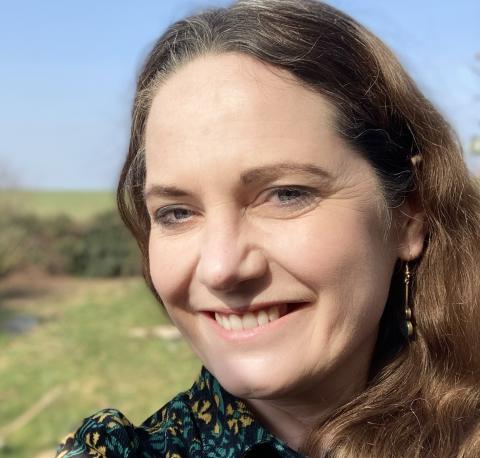
Prof Catherine Hall
Prof Catherine Hall is a Group Leader at the BHF-UK DRI Centre for Vascular Dementia Research. Find out more about her career and expertise on her profile page.

Research summary
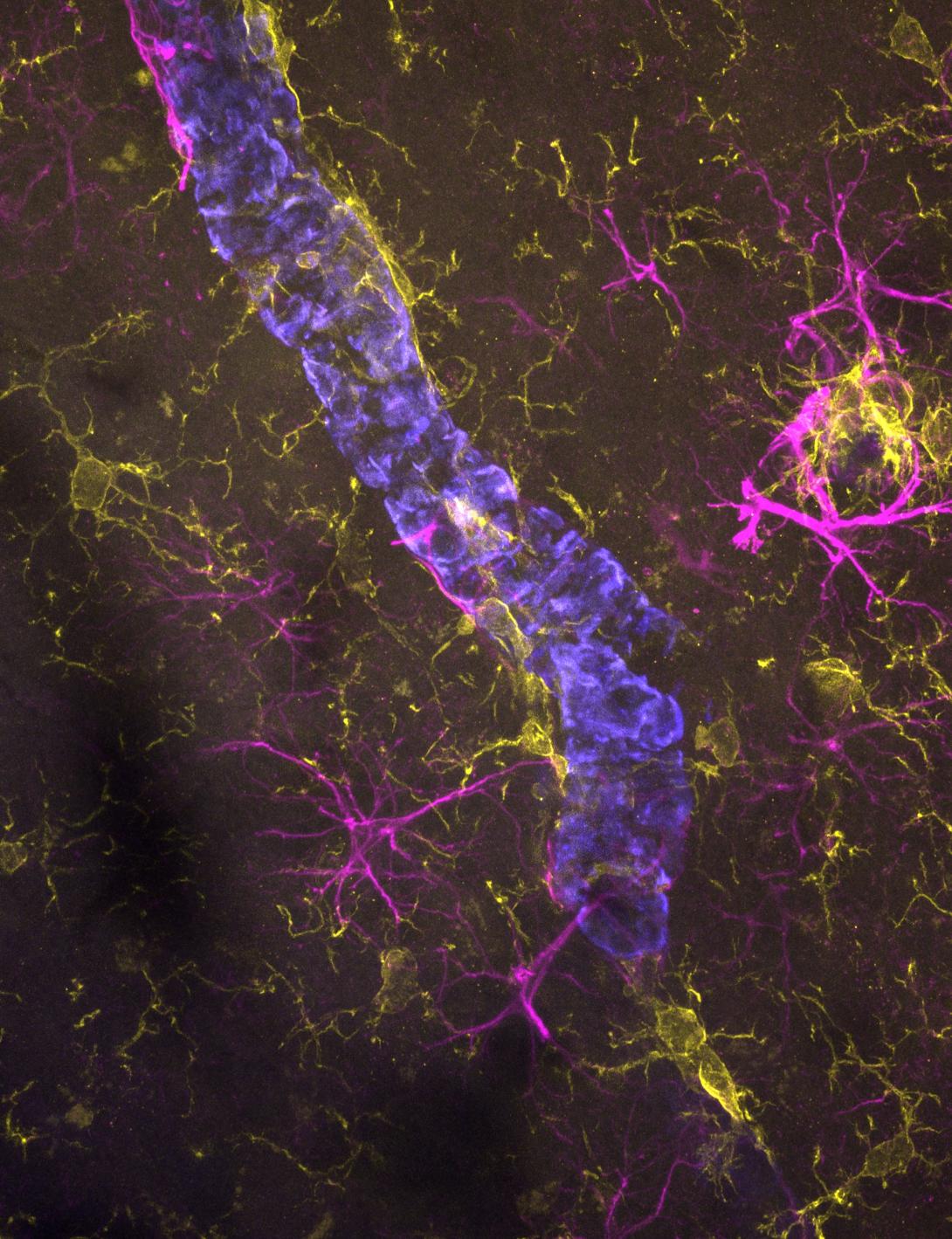
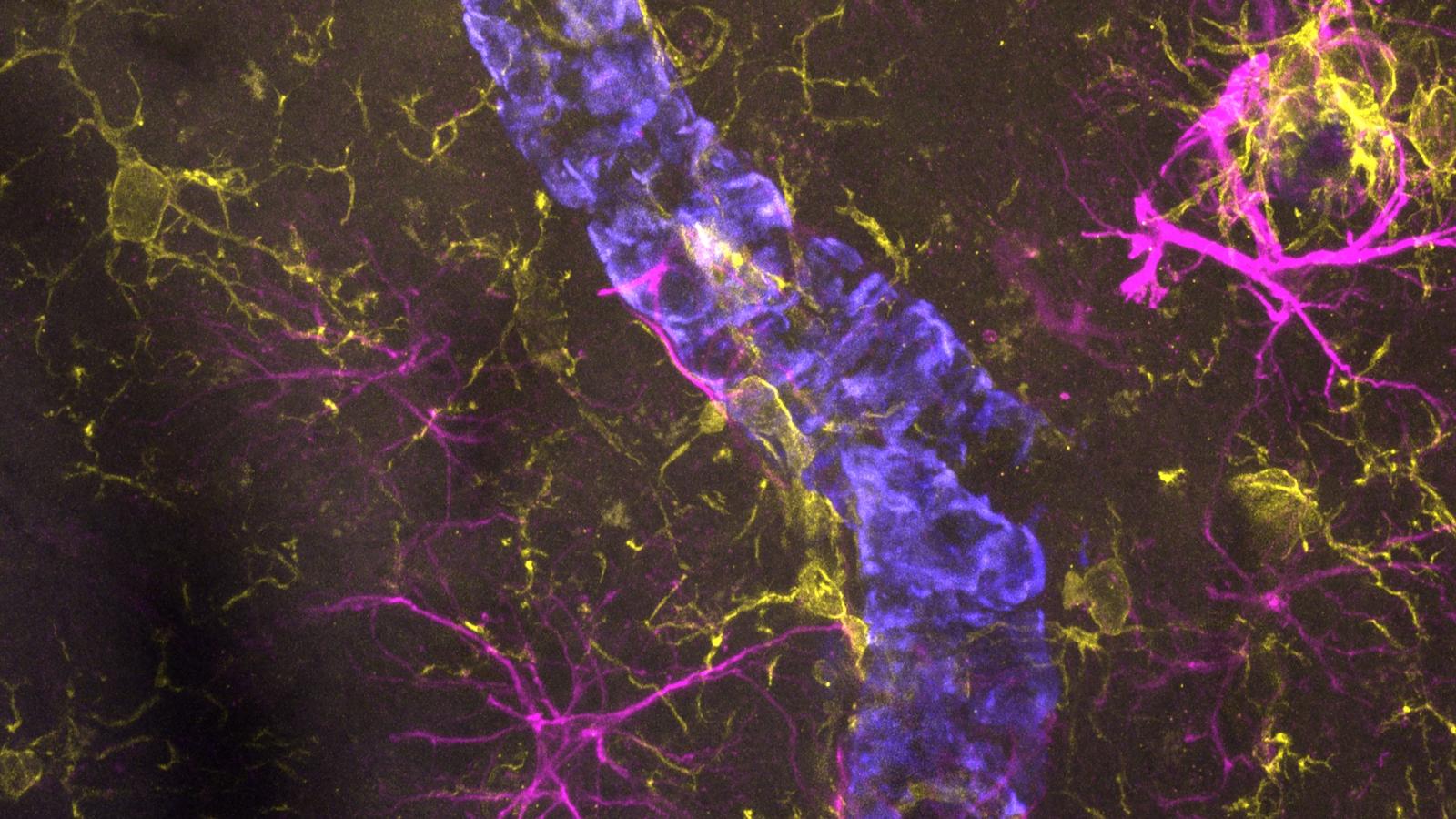
Aggregated beta amyloid (blue) around a mouse arteriole, 1 year after switching on human amyloid precursor protein expression. Astrocytes are shown in magenta and microglia in yellow.
Credit: Catherine Hall and Harry Trewhitt
What is the role of a disrupted oxygen supply in small vessel disease and dementia?
This project aims to understand how disrupted blood and oxygen supply to the brain contributes to the development of dementia, and to identify biological changes that could be targeted to prevent or slow disease progression. The lab will study how healthy blood vessels normally support brain activity, how this support fails when oxygen or blood flow is reduced, and how risk factors and Alzheimer’s-related pathology worsen these effects.
The researchers will focus on brain regions that differ in their vulnerability to dementia, including the cortex, hippocampus (important for memory), and white matter. Using advanced imaging in mice, we will measure brain cell activity, blood flow, and oxygen levels over time, while also examining how these change when oxygen supply is deliberately reduced. They will test the impact of dementia risk factors such as the APOE4 gene and the build-up of amyloid proteins.
The overall project will interrogate how a disrupted blood and oxygen supply could promote the emergence of vascular and mixed dementia, and identify physiological changes and/or underlying mechanisms to target to prevent or reduce the occurrence of dementia.
To do this, the Hall lab use three broad approaches:
- Characterise normal cerebrovascular physiology in diverse vascular networks associated with disease resilience and risk (e.g. neocortex, hippocampus, corpus callosum), with a focus on understanding relationships between different physiological features of the system (e.g. vasomotion, vasodilation, cerebral blood flow, neurovascular coupling, oxygenation).
- Interrogate how experimentally reducing the oxygen supply to these resilient and at risk regions (by reducing inspired oxygen or reducing blood flow pharmacologically or surgically) affects the physiology of this cerebrovascular network.
- Determine how risk factors for disease (e.g. APOE4, physical activity) and classic Alzheimer’s pathology (e.g. soluble or aggregating beta amyloid) interact with cerebrovascular physiology in these resilient and at-risk regions and identify mechanisms underlying these changes.
Key publications
Vacancies
Lab members


Lab funders
Thank you to all those who support the Hall Lab!