
Research led by Dr Shlomi Haar and Prof Tim Constandinou (UK DRI Care Research & Technology) tested the ability of two passive sensors to track movement changes in people affected by Parkinson’s. The study, published in the Journal of NeuroEngineering and Rehabilitation, could help build better digital measures of Parkinson’s symptoms.
What was the challenge?
Problems with walking are some of the most common movement symptoms affecting people with Parkinson’s. Up to 80% of people with Parkinson’s experience freezing, a sudden inability to walk or step forward. These problems are a primary cause of falls in people with Parkinson’s, leading to increased hospitalisations and reduced quality of life. Their incidence can change over the course of a day, especially as medication starts working and then wears off.
Clinic visits only capture short moments in time, making it challenging for clinicians to understand the extent of someone’s symptoms and how they change throughout the day. Wearable devices can help with this, but they still rely on users being able to put them on, charge them, and use them correctly.
What did the team do and what did they find?
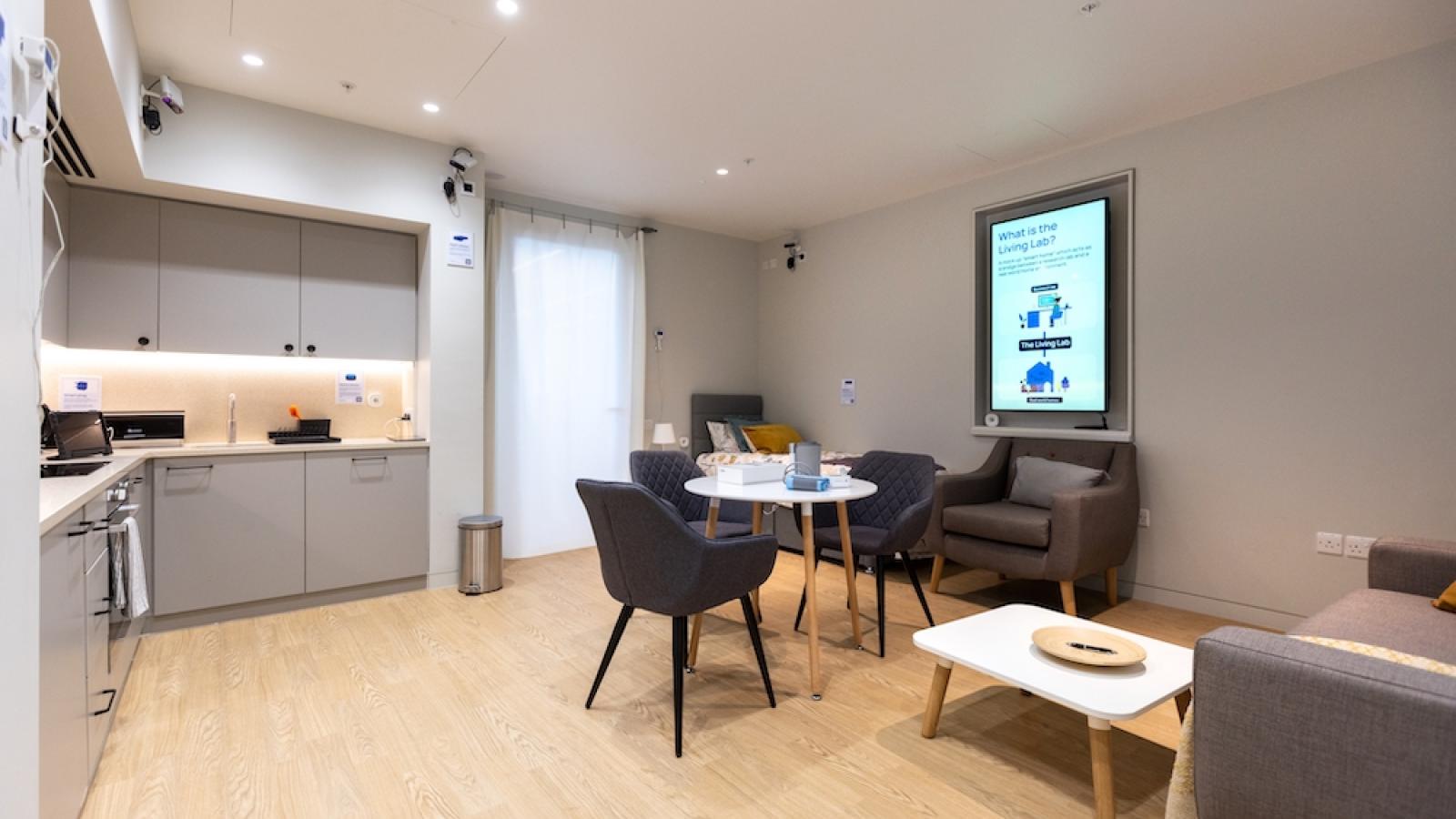
In this study, the team looked at two contact-free sensors that could work quietly in the background. One was a depth camera. The other was a radar sensor, which uses radio waves to track movement. The team tested these tools in the Living Lab, a model home environment within the UK DRI Centre for Care Research & Technology.
The study included 15 people with mild Parkinson's and 14 healthy older adults. People with Parkinson's completed short walking tasks at two points in their medication cycle. One test happened when their medication was working. The other happened just before their next dose, when symptoms were more likely to return.
The researchers found that both types of sensors could tell the difference between people with Parkinson’s whose medication was wearing off, and healthy controls. The radar sensor also picked up differences between the two timepoints in people with Parkinson’s. Neither sensor found a clear difference between people with Parkinson’s who had just taken their medication, and healthy controls. This suggests medication reduced some of the walking differences that the sensors could see.
Our study shows that camera and radar systems could become useful tools for tracking movement over time in people affected by Parkinson’s. These devices could be used to track things like disease progression over time and response to treatment – enabling personalised medicine and improving the way we measure the success of new treatments in clinical trials.
Dr Shlomi HaarUK DRI Emerging Leader and Senior Lecturer in Cognitive Neuroscience at the University of Surrey
What is the impact?
This study shows that passive sensors may help track meaningful changes in movement without asking people to wear devices. That could make long-term monitoring easier and less intrusive.
Reference: Yun, J.J., Hadjipanayi, C., Jahangiri, A. et al. Passive sensing of gait and medication-related fluctuations in Parkinson’s disease. J NeuroEngineering Rehabil 23, 213 (2026). https://doi.org/10.1186/s12984-026-02068-6