New research led by Prof Sir David Klenerman and Dr Dorothea Böken (UK DRI at Cambridge) reveals insight into how the accumulation of toxic tau protein varies early on in different neurodegenerative conditions. The study, published in Cell Reports, could inform the development of new biomarkers and targeted therapeutics.
What was the challenge?
The build-up of misfolded tau protein is a hallmark of certain neurodegenerative conditions, including Alzheimer’s. Scientists have established that large, insoluble clumps of tau look different depending on the disease, but it remains unclear whether the smaller tau clumps that form earlier in disease progression also differ between conditions.
What did the team do and what did they find?
In this study, researchers examined these early, small tau clumps in brain tissue from people who had died with one of four brain diseases - Alzheimer's, progressive supranuclear palsy (PSP), corticobasal degeneration (CBD), and Pick's disease – as well as healthy controls for comparison.
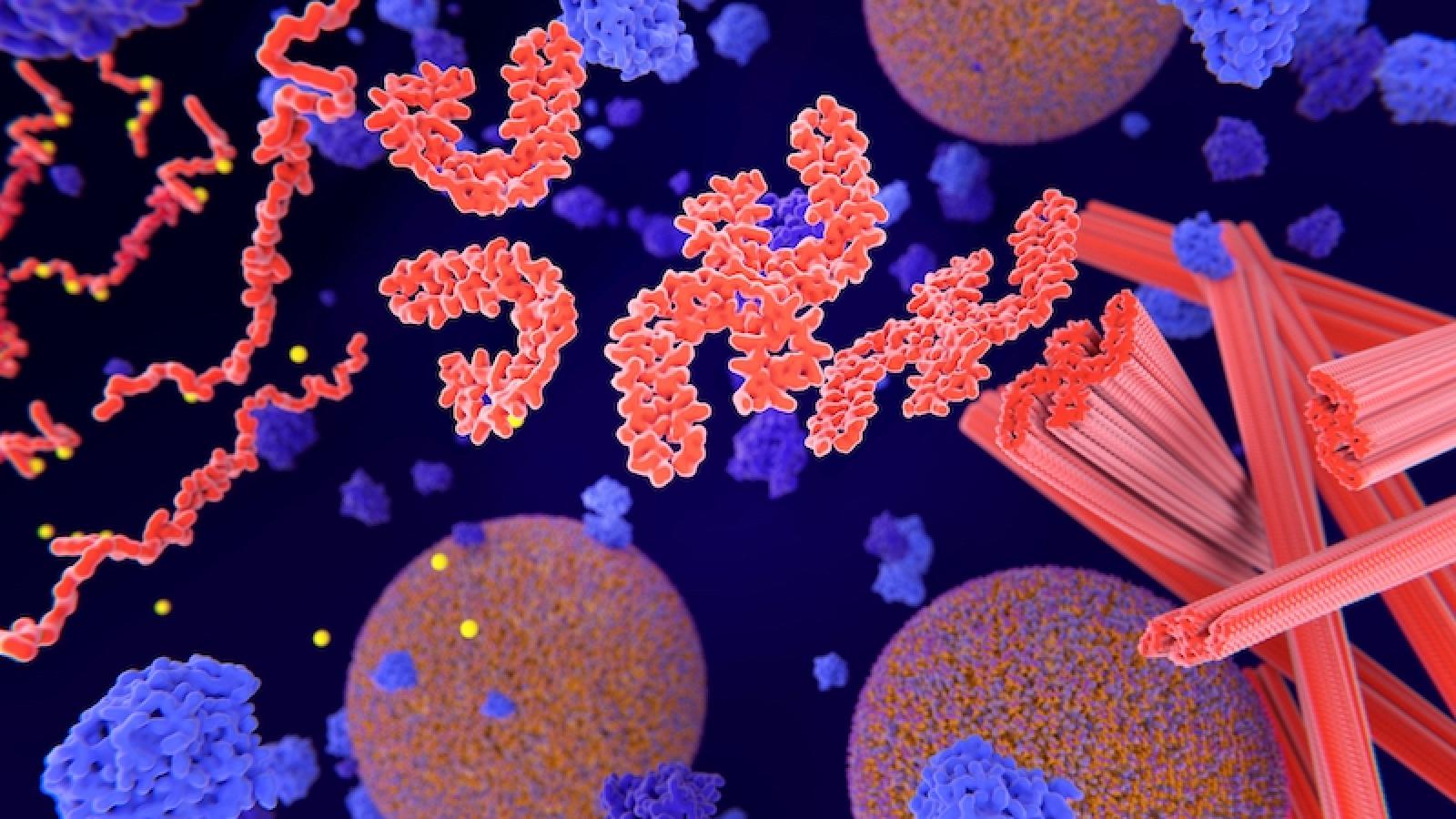
Using two highly sensitive techniques, they found that these early tau clumps vary across diseases, in number, shape, and in the chemical tags attached to them. For example, in Alzheimer's, the clumps tend to be long and fibrous and carry specific chemical markers. In other diseases such as PSP and CBD, the tau clumps are predominantly shorter and rounder, and carry different chemical tags.
The properties of these clumps also matched patterns of cellular stress and aligned with how each condition tends to spread in the brain, suggesting each has its own distinct disease process happening at an early stage.
We hope this work provides a stronger biological basis for developing more precise biomarkers of tau pathology. Our findings could also have implications for the design of new therapeutic strategies targeting different species of tau. This lays the groundwork for more targeted treatments that could slow disease progression, reduce harmful inflammation and improve quality of life for people living with different forms of dementia.
Dr Dorothea BökenUK DRI Postdoctoral Researcher
What is the impact?
These findings show that biologically meaningful differences between conditions are already present at the level of these small tau clumps, rather than only emerging at later stages. This means they could be used as early diagnostic markers or targeted by treatments tailored to each specific disease.
Reference: Böken D, Huang M, Wu Y, et al. Nanoscopic tau aggregates are not shared intermediates but disease-specific entities across tauopathies. Cell Rep. 2026;45(2):116934. doi:10.1016/j.celrep.2026.116934