
To help us achieve our goal of transforming the lives of people living with and at risk of neurodegenerative conditions, it is vital that people living with dementia, their families and carers, and the wider public are closely involved and engaged in our work.
Across the institute, scientists are taking part in public engagement and patient involvement in a multitude of ways, from school visits, to creating short-form social media videos. Each year, we award an Engagement Prize, judged by a panel of experts, to the researcher who has carried out the most impactful engagement activity for the year. Here are the activities which were nominated this year:
Inspiring understanding of MND through creative engagement
Jade Lucas and Abby O’Sullivan (UK DRI at Edinburgh) designed and led an innovative suite of public engagement activities that connect patients, families, and young learners with cutting-edge neuroscience research. Their flagship project is a 6-minute educational video for patients at the Anne Rowling Regenerative Neurology Clinic, which explains how donated blood samples are transformed into stem cells in the lab and how these cells advance understanding of neurological diseases like MND. They have further built on this by designing an interactive lesson to teach primary age children how the brain processes sensory information and controls movement.
Bringing a researcher perspective to local charity engagement
Florence Layburn (UK DRI at Cambridge) plays an active role on the committee of the Parkinson’s UK Cambridge Branch, updating the branch website, social media and newsletters, and volunteering at local fundraising events. Last year, she organised a Christmas fundraising concert, raising about £2,800 for Parkinson’s research. She instigated new initiatives such as adding a ‘researcher spotlight’ to the newsletter, and organising a travel grant to help young researchers attend international conferences.
Social media storytelling to break down stigma
Toby Curless (UK DRI at UCL) creates short social media videos describing different neurodegenerative diseases and ongoing research in an accessible way. His TikTok channel has grown to over 80,000 followers and has received positive messages from followers ranging from inspiring them to pursue careers in neuroscience, or thanks for helping them understand what dementia is.
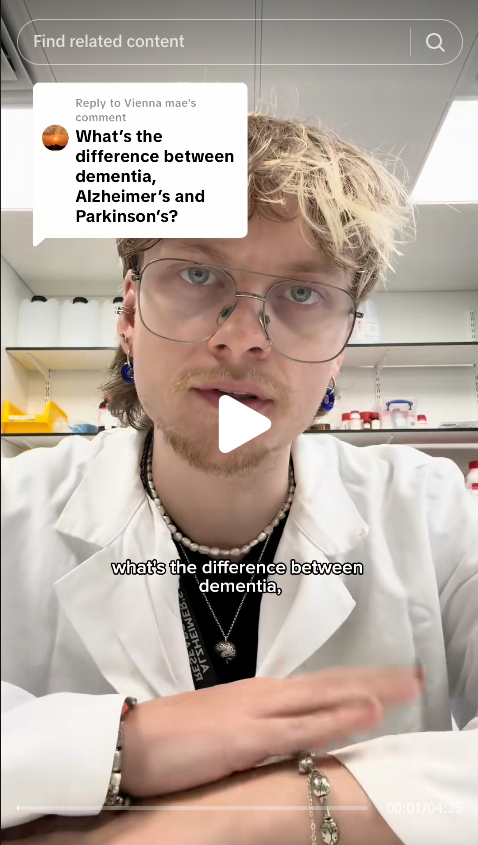
Toby makes shortform videos for TikTok, Instagram and LinkedIn, breaking down complex science into an accessible format
Raising awareness of frontotemporal dementia among public audiences
The ON-FIRE network (Open Network for Frontotemporal Dementia Inflammation Research) – including Maura Malpetti, Rossmarjin Frohn and Julia Goddard (UK DRI at Cambridge) – is a national collaboration uniting more than 20 UK centres and clinics to study targetable inflammatory pathways in people living with sporadic FTD. Alongside its scientific mission, ON-FIRE is committed to raising awareness and improving understanding of FTD among the public. Over the past year, the network delivered a series of impactful engagement and involvement activities designed to connect people affected by dementia, carers, clinicians, and researchers. Highlights include presentations at the Cambridge Alumni Festival, a TEDx talk, the NIHR Cambridge BRC Open Event, the Rare Dementia Support annual seminar, and the Cambridge Festival.
Embedding human-centred design in care research
The Helix Team plays a pivotal role in driving the UK DRI Centre for Care Research and Technology’s commitment to embedding human-centred design and PPIE across all our activities. Their work is essential in ensuring that the centre brings meaningful and valuable care to people living with dementia. Beginning with a deep understanding of the lived experiences of people living with dementia (gathered through our Dementia Lived Experience Group), Helix leads a co-design approach that translates these insights into optimised user experiences through iterative co-creation processes.
WINNER: Facilitating outreach among underrepresented community groups
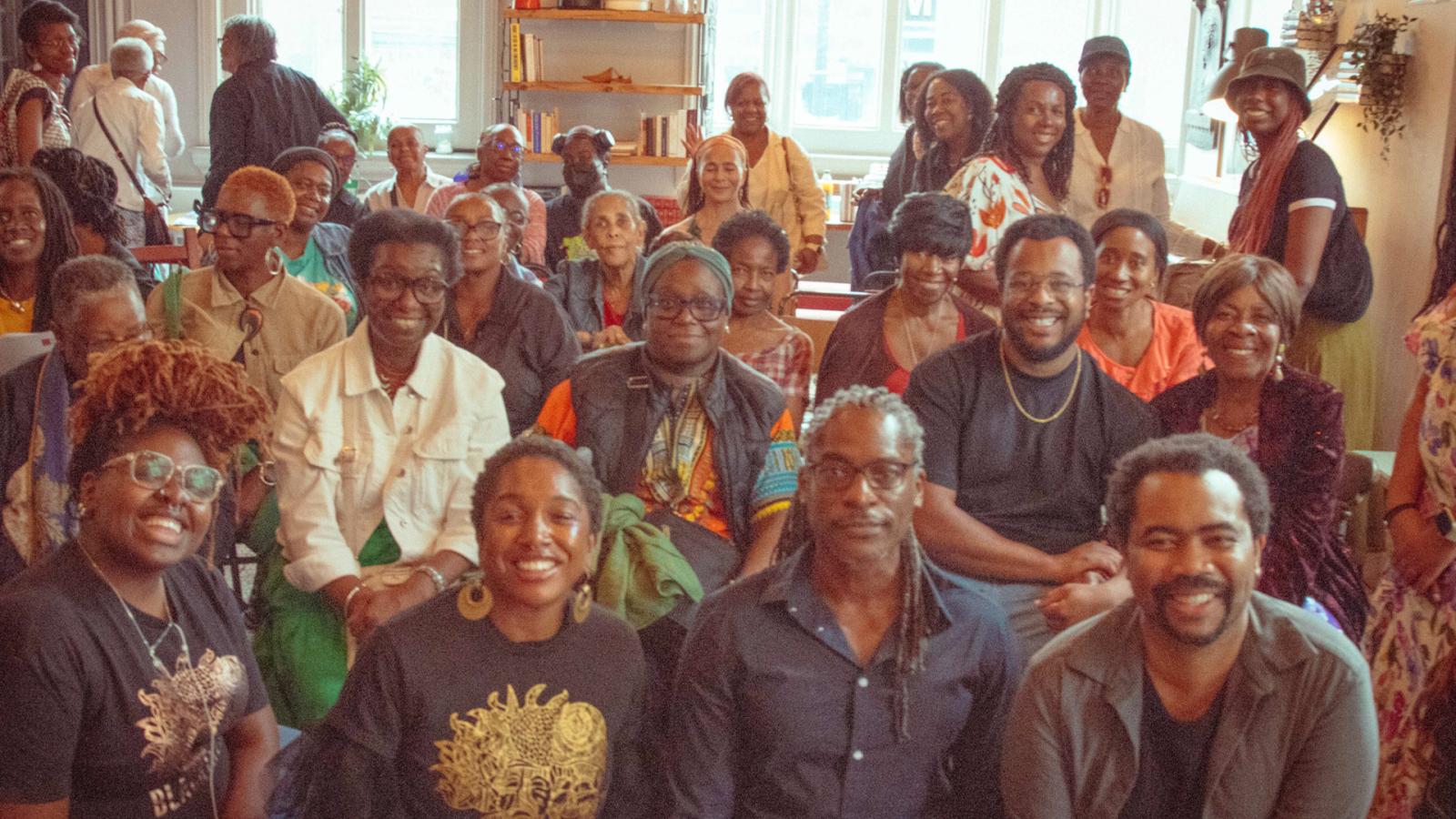
Nathasia Muwanigwa (UK DRI at UCL) organised a community panel discussion about dementia with over 60 attendees from Black African and Caribbean communities aged 60+, their family members, and other stakeholders. The event formed part of a wraparound public engagement initiative linked to Miss Myrtle’s Garden, a play written by Danny James King that ran at the Bush Theatre from 31 May to 12 July. During the discussion, attendees had the opportunity to hear directly from Black dementia researchers about what dementia is – and what it isn’t – as well as dementia care in the UK. The panel addressed key risk factors, debunked common myths, and responded to thoughtful audience questions. For many in the room, it was their first time engaging with Black scientists, powerfully highlighting the importance of diverse representation in science and research.
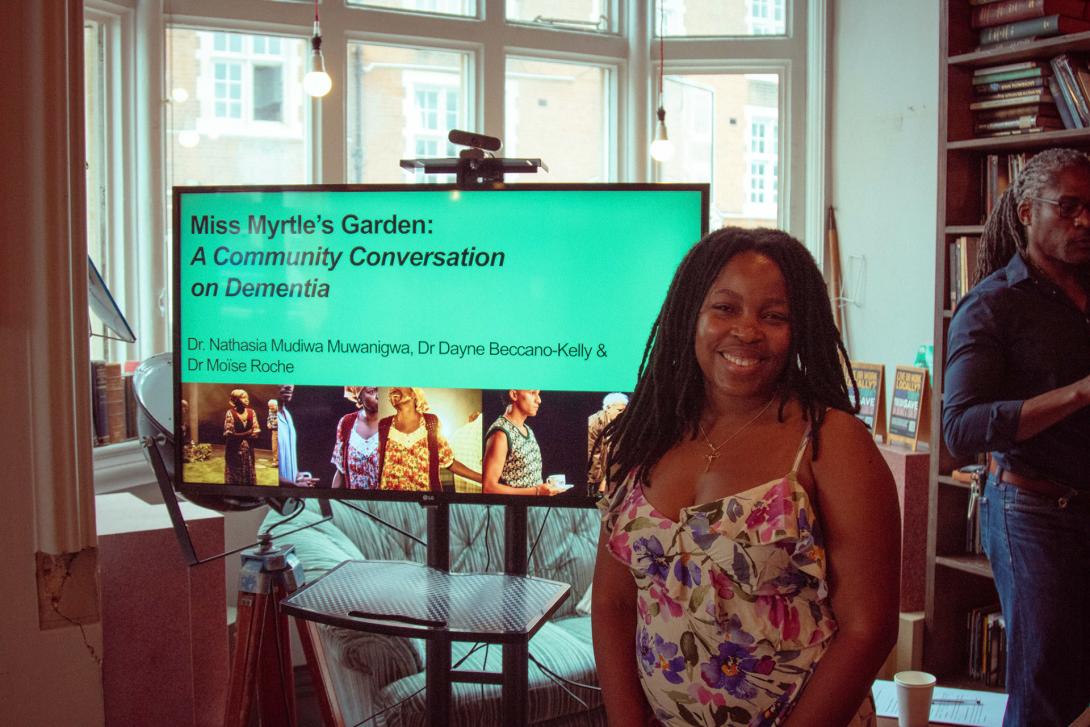
Nathasia at the Miss Myrtle's Garden panel event
One attendee said:
“Thank you, I was so informed. Panel speakers were all exceptional. Great having this expertise in the room.”
Nathasia’s work is immensely inspiring, and she was awarded the UK DRI Engagement Prize for 2025. The judging panel described it as a ‘fantastic example of engagement carried out in an inclusive, welcoming and accessible way’, that created a ‘great sense of community and storytelling’.
On receiving the award, Nathasia said:
“Despite Black communities being disproportionately affected by dementia in the UK, they remain under-represented in research, clinical trials, and outreach efforts. Ensuring that our research serves everyone means actively engaging people from all ethnic backgrounds.
Engaging directly with Black communities around dementia has been one of the most meaningful aspects of my work as a researcher and it has also highlighted how much more we need to do to build trust and foster equitable participation. Winning this award was an incredible and humbling honour. I’m excited to continue building on this work in 2026 through a series of DRI-funded co-production workshops focused on brain health and dementia awareness in Black communities, culminating in an exhibition that will act as a call to action to address persistent inequalities.”
Read more about Nathasia's work in her recent blog, 'Miss Myrtle’s Garden: Public engagement with Black communities on dementia'.