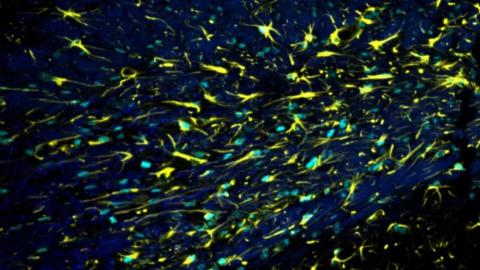
We are pleased to announce that Prof Veronique Miron (UK DRI at Edinburgh) and Prof David Sharp (UK DRI Care Research & Technology) have today been elected to the Academy of Medical Sciences Fellowship for their exceptional research into neurodegenerative conditions.
The 60 new Fellows in this year's cohort have been recognised for their outstanding contributions to advancing medical science, through discovery research, translational work and the application of scientific knowledge in ways that deliver tangible benefits for patients and the wider public.
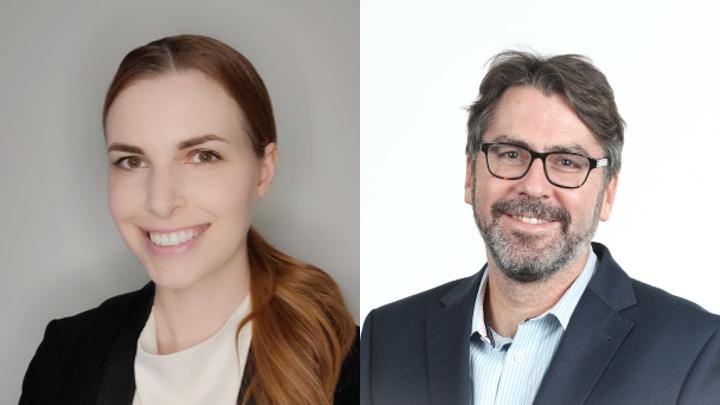
Prof Veronique Miron is a Group Leader at the UK DRI at Edinburgh, and a Senior Lecturer and MRC Senior Non-Clinical Fellow at the University of Edinburgh. Prof Miron’s research focuses on white matter health and pathology, revealing the cellular and molecular mechanisms by which oligodendrocytes become dysfunctional in ageing and neurodegenerative diseases such as Alzheimer’s. Her work has shown that communication between oligodendrocytes and other glial cells is critical for myelin maintenance and repair. In addition to research, Prof Miron is an advocate for equality and diversity in STEM, and supporting the ECR community.
Prof Miron said:
“I am incredibly honoured to be elected a Fellow of the Academy of Medical Sciences. This recognition reflects the collective dedication, creativity, and hard work of the many outstanding trainees, collaborators, colleagues, and mentors I have had the privilege to work with over the years. I look forward to continuing our work to advance discoveries and therapeutic strategies to treat neurodegenerative diseases.”
Prof David Sharp is Director of the UK DRI Centre for Care Research & Technology and Professor of Neurology in the Imperial Department of Brain Sciences, where he focuses on harnessing technology to improve the lives of people living with dementia. His research uses cognitive neuroscience and advanced neuroimaging to investigate how brain injury and neurodegeneration affect brain network function, with a particular focus on memory and attention. He has explored how treatments for cognitive impairment can be personalised, and his current work centres on neurotechnology development for dementia and traumatic brain injury.
Prof Sharp said: “I am honoured to have been elected to the Academy of Medical Sciences, and I would like to acknowledge the contributions of the many outstanding researchers with whom I have had the privilege to work. Our research has focused on understanding the long-term effects of traumatic brain injury, its relationship to neurodegenerative disease, and the use of new technologies in dementia care. The work is translational and human-focused, so I would also like to thank the people affected by these conditions who have participated in our research and who continue to work closely with us today.”
Prof Andrew Morris, President of the Academy of Medical Sciences, said:
“It is a privilege to welcome this outstanding new cohort to the Fellowship of the Academy of Medical Sciences. Each of our new Fellows has been recognised by their peers for exceptional achievement for the influence their work has had in advancing medical science and improving health.”
Source: Academy of Medical Sciences