
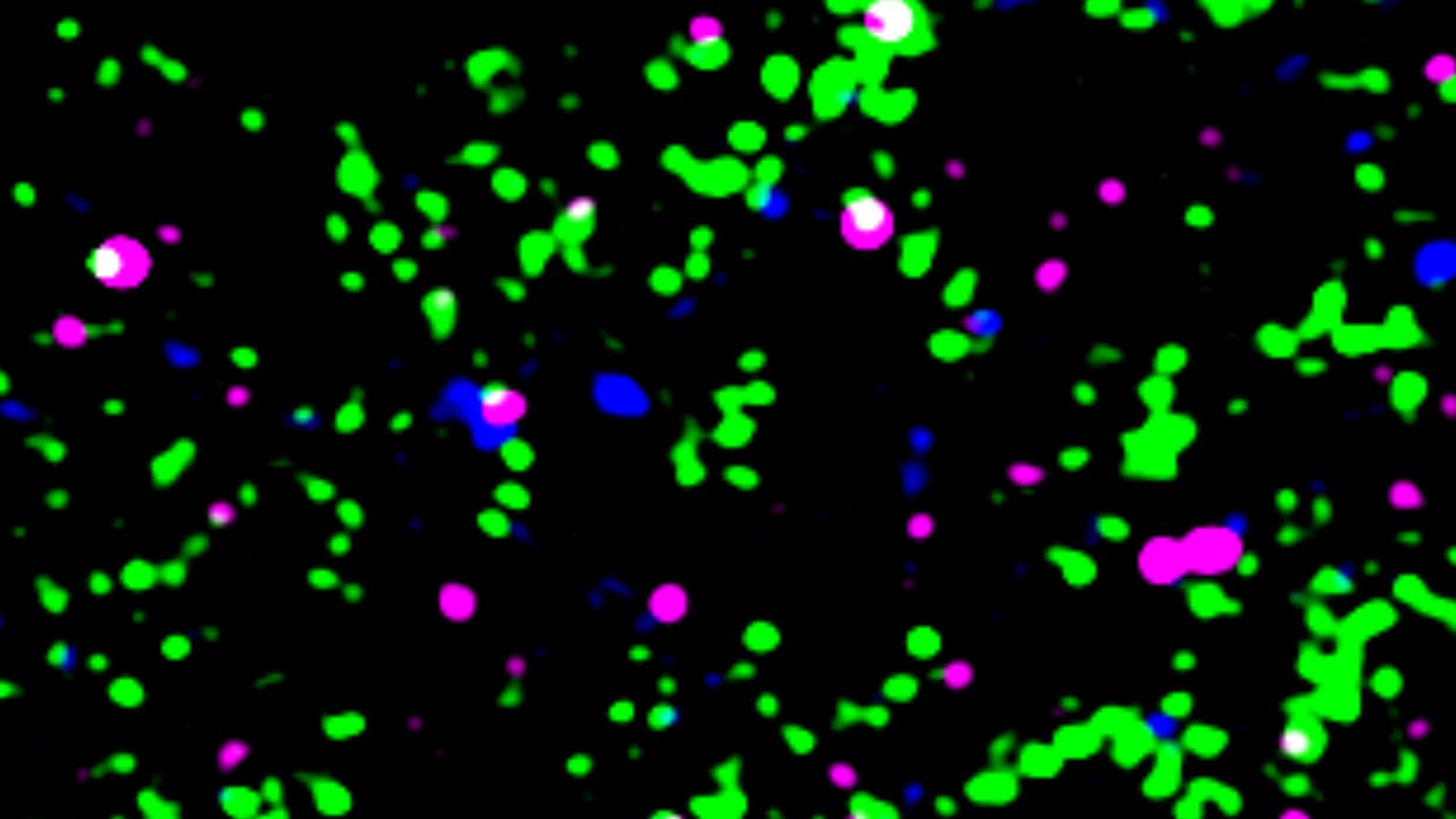
New research led by Dr Gerard Crowley and Dr Soyon Hong (UK DRI at UCL) reveals insight into what triggers the loss of connections between neurons that occurs in Alzheimer’s disease. The study, published in Science, could lead to new therapeutic targets for Alzheimer’s.
What was the challenge?
In Alzheimer’s disease, the loss of synapses - the connection points between neurons - is strongly linked to cognitive decline. A molecule known as C1q, part of the innate immune response, is known to be involved in synapse loss. But exactly what triggers it, and how this leads to synapses being lost, is unclear.
In the early stages of Alzheimer’s, scientists have shown that electrical activity between neurons is disrupted in specific regions of the brain. The cells become hyperactive, meaning they fire signals too frequently or too easily. In this study, scientists set out to establish whether hyperactivity in the brain could be linked to synapse loss involving C1q.
What did the team do and what did they find?
The researchers first investigated whether hyperactive neurons trigger the loss of synapses within the hippocampus, one of the first brain regions to be affected in Alzheimer’s disease. To study this, they caused a particular set of neurons in the entorhinal cortex, an early vulnerable brain region in Alzheimer’s, to become hyperactive. They found that inducing activity in these entorhinal cortex neurons reduced synapse numbers in the hippocampus closely associated with the hyperactive neurons. Importantly, the team found that this loss of synapses in the hippocampus was dependent on the immune protein C1q.
The researchers looked at a mouse model of Alzheimer’s disease in which these entorhinal cortex neurons are hyperactive already. When they dampened this hyperactivity, they found that this decreased accumulation of C1q on the hippocampal synapses and prevented some synapses from being lost.
Surprisingly, the researchers also observed specialised immune cells called B cells, not normally found in the brain, accumulating near where synapse remodeling was occuring in the hippocampus. Investigating further, they found that these immune cells released molecules called immunoglobulins, or antibodies. These antibodies were closely associated with the synapses marked by C1q, suggesting that antibody-related immune signals may help determine which synapses are targeted.
The team also tested mouse models that were not able to produce antibodies and found that without this, C1q did not accumulate and fewer synapses were lost.
Dr Gerard Crowley said:
“We showed that when neurons become hyperactive, as we know occurs in Alzheimer’s, this can trigger the loss of neuronal connections. Importantly, we found that reducing this hyperactivity meant we were able to prevent as many synapses being lost – indicating a potential therapeutic avenue that could help slow the progression of Alzheimer’s.”
This study reveals, for the first time to the best of our knowledge, that peripheral immune signals (B cells and immunoglobulins) can mark hyperactive brain synapses for elimination, identifying an unexpected immune mechanism linking neuronal activity to synapse loss in disease.
Group Leader
What is the impact?
Altogether, this study suggests that antibody-related immune signals help guide C1q to vulnerable synapses, and provide a new way to understand how early changes in brain activity in neurological conditions could involve immune pathways to guide selective loss of brain connections.
This research reveals a new link between hyperactivity in neurons and synapse loss, triggered by immune cells. Because changes in brain activity occur early in Alzheimer’s, this work provides a possible mechanism by which early changes lead to the loss of synapses. It also points to the hyperactivity-immune cell interface as a potential route for future therapeutic strategies aimed at protecting synapses.
Reference: Gerard Crowley et al., C1q and immunoglobulins mediate activity-dependent synapse loss in the adult brain. Science 393, eadv1219 (2026). DOI:10.1126/science.adv1219
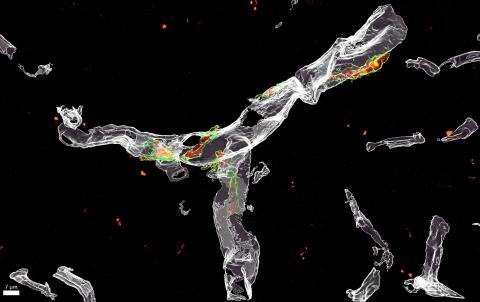
Banner image: Airyscan high-resolution microscopy image of fluorescently labelled colocalised IgM (blue), C1q (green) and VGLUT2 (synaptic marker; magenta) at the hippocampus. Credit: Gerard Crowley.