
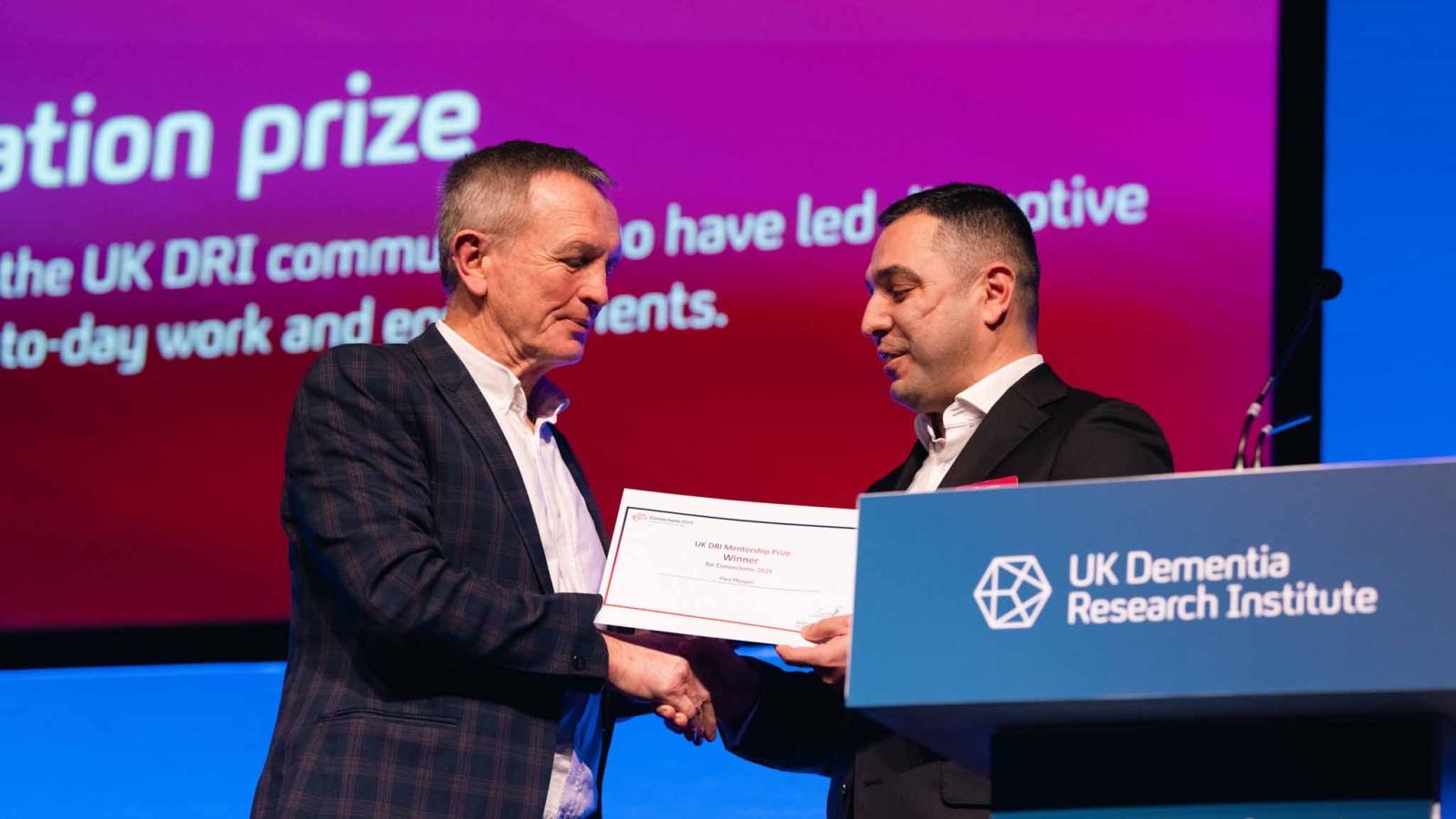
We are delighted to announce the winners of the 2025 UK DRI Recognition Prizes, awarded last week at our annual conference, Connectome. The prizes are designed to recognise and highlight excellence across the UK DRI community, including two new prizes for this year.
Mentorship prize (new)
This new mentoring award acknowledges and rewards outstanding mentoring that fosters the growth, skills enhancement, and career progression of researchers within the institute. It highlights the importance of mentorship in building a supportive and productive research environment.
Paul Morgan (UK DRI at Cardiff) and Filipa Henderson Sousa (UK DRI at Edinburgh) were the winners of this inaugural award.
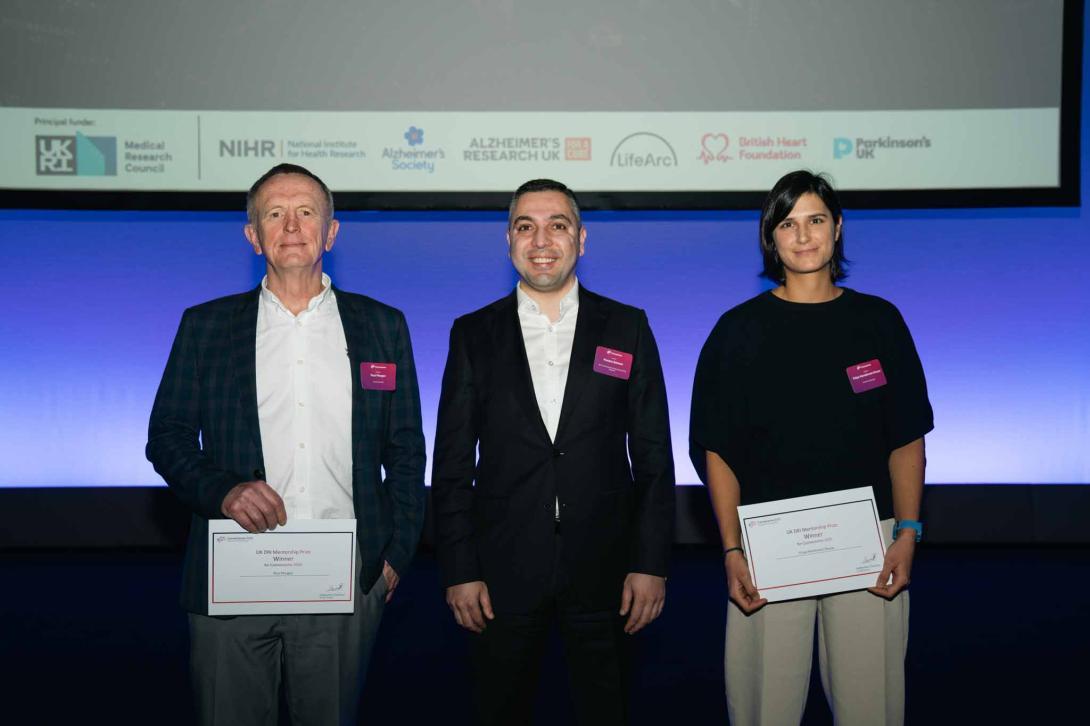
Paul and Filipa recieving their awards from Mootaz Salman
“Working under Professor Paul Morgan’s mentorship transformed the way I approach scientific questions, leadership and collaboration. His belief in my potential encouraged me to step into roles I would never have imagined - both in academia and industry."
Claire Harris, Head of Biology at Sitala Bio
"Thanks to Filipa’s mentorship, I have grown into a confident and capable researcher who feels ready to embark on my career journey. Many of Filipa’s students, myself included, have chosen to return to the Bowles Lab - a testament to the welcoming and collaborative environment she has helped create."
Research assistant, Bowles Lab, UK DRI
Innovation prize (new)
This award recognises and celebrates members of the UK DRI community who have led disruptive contributions in their day-to-day work and environments. The award celebrates “thinking outside of the box” ethos and contributions that have made a substantial difference.
Junheng Li (UK DRI at Imperial) was the winner of this prize. He reported the discovery that the human brain’s transition into sleep exhibits an abrupt, falling-like bifurcation trajectory, with a momentary tipping point that can be accurately predicted in real time by analysing EEG activity. This study was published in Nature Neuroscience last month and has been filled in a patent application. The reviewers highlighted this is a “clearly innovative research discovery with significant impact for the UK DRI and the wider society”.
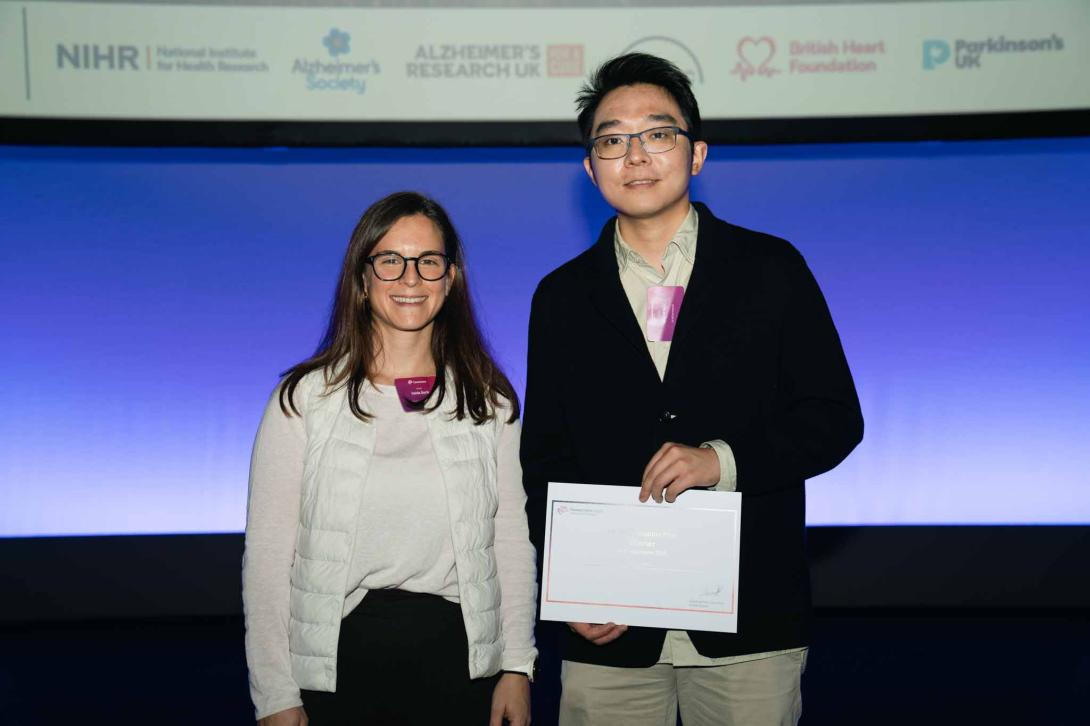
Junheng Li receiving his award from Iraida Soria
PhD Prize
This award recognises and celebrates the outstanding achievements of doctoral researchers whose work has significantly advanced the understanding, diagnosis, treatment, or prevention of dementia and neurodegenerative diseases.
Congratulations to:
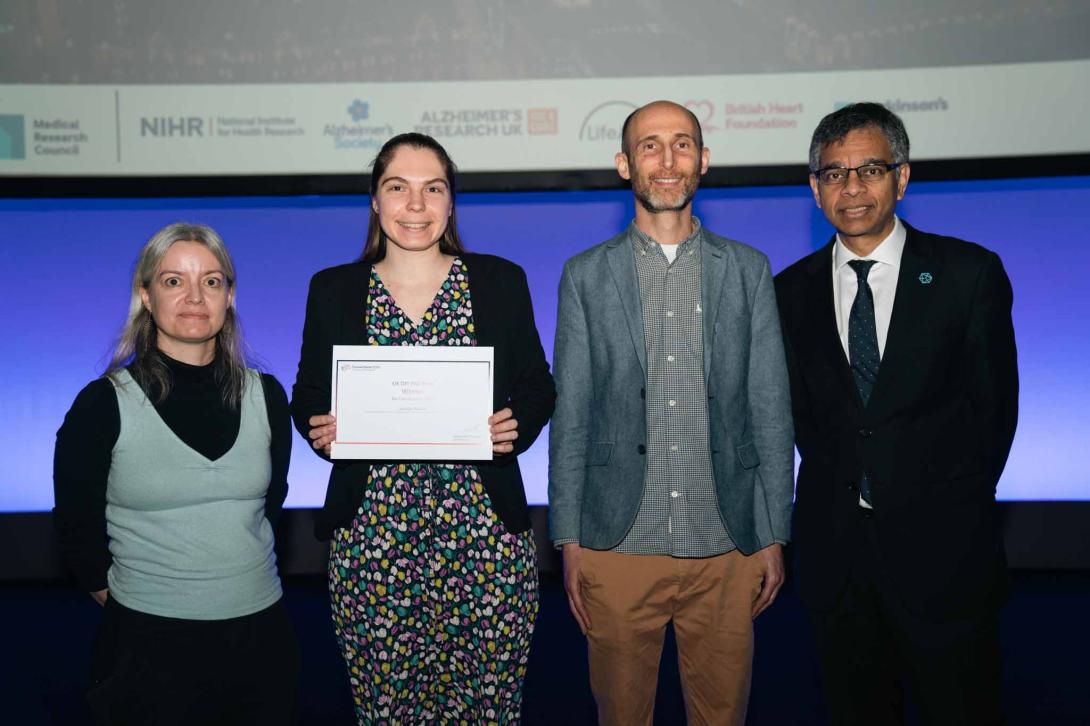
Jennifer receiving her prize from Jo Latimer, Adrian Isaacs and Siddharthan Chandran
Jennifer Palmer (UK DRI at Cambridge)
"It has been a pleasure and a privilege to have Jennifer in my group. She is a great team-player and an excellent, popular and supportive colleague with her peers. She has successfully supervised summer students in the lab and is currently providing guidance to a new PhD student. She has been involved in a number of student committees, where she has made important contributions."
David Rubinsztein
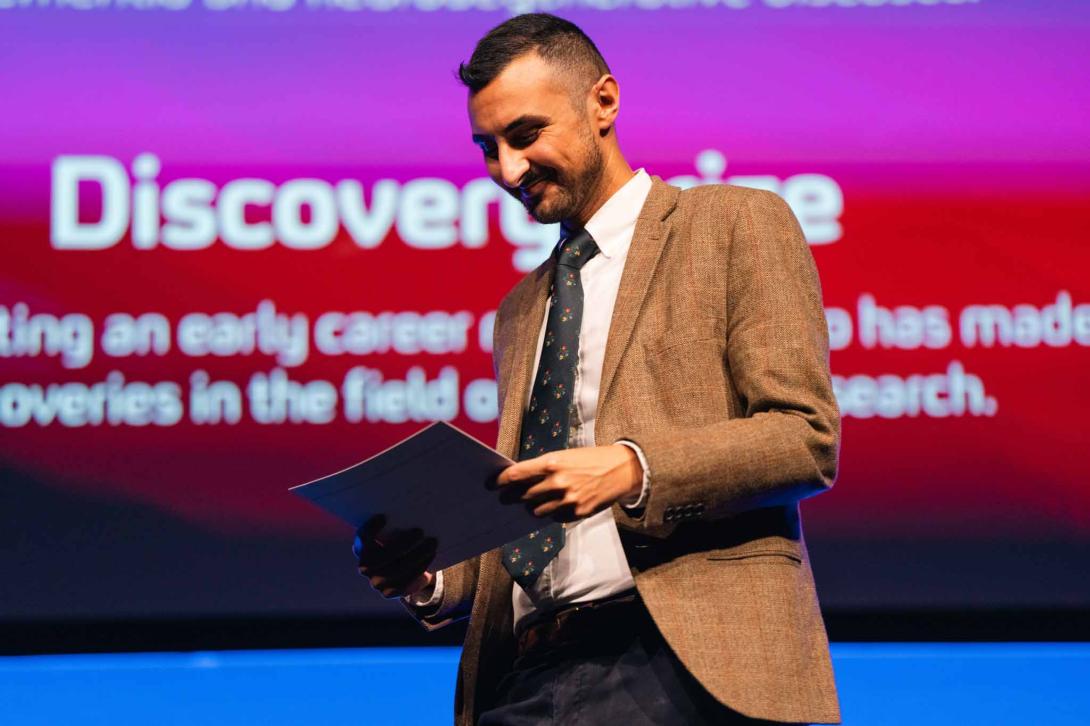
Mena after receiving his award
Mena Farag (UK DRI at UCL)
"Mena is a diligent and thoughtful clinician-scientist whose work is characterised by intellectual curiosity, methodological rigour and a deep sense of purpose. He communicates complex ideas with clarity and confidence. Mena’s research exemplifies the UK DRI’s mission to translate fundamental discoveries into clinical benefit. As he returns to neurology training with the aim of pursuing a clinical lectureship, he is exceptionally well-placed to continue and potentially lead future translational work linking biomarker discovery to disease-modifying therapies in HD and related neurodegenerative disorders."
Sarah Tabrizi
Kevin Ziegler (UK DRI at Imperial)
"Kevin ranks amongst the most outstanding PhD students I have known. He is mature, works very independently and demonstrates scientific acumen and curiosity. Kevin took on full leadership of his research project from the onset, including formulating the initial research question and implementing the necessary experimental directions."
Alexi Nott
Discovery Prize
This award is aimed at early career researchers who have made groundbreaking discoveries in the field of dementia research. The award celebrates innovative and transformative research that has the potential to significantly advance our understanding, diagnosis, treatment, or prevention of dementia and neurodegenerative diseases.
Dr Viola Volpato (UK DRI at Cardiff) was the winner of the Discovery prize. Her work entitled “A deep cellular atlas of the human ventral substantia nigra in Parkinson’s identifies a genetic and molecular overlap with insulin resistance” represents the first deep single-cell atlas of any human disease, focused on the most vulnerable region of the Parkinsonian brain. Throughout the course of this work, Dr Volpato has demonstrated leadership, scientific rigor, and an unwavering commitment to discovery.
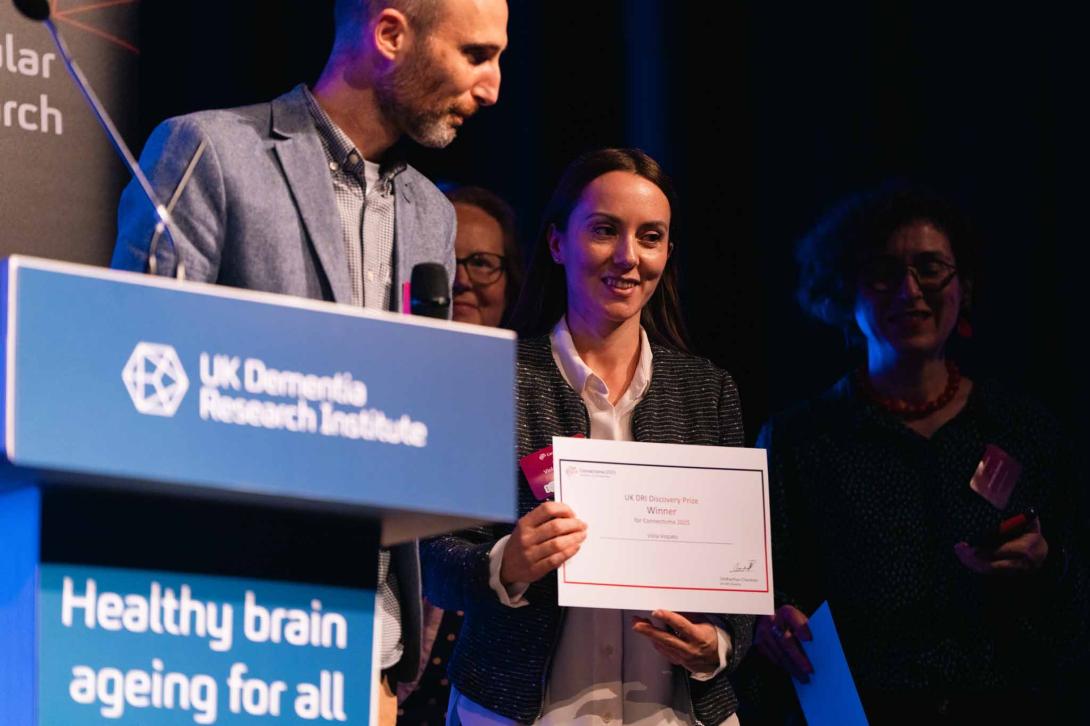
Viola on stage with her award
Reproducibility prize
The Reproducibility in Dementia Research prize promotes open science by developing sustainable and reproducible practices as part of research output.
Congratulations to Nan Fletcher-Lloyd (UK DRI Care Research & Technology). Nan won their prize for the "3BTRON: A Blood-Brain Barrier Recognition Network" project which scored highest in all the categories:
- Clarity and completeness of documentation
- Availability and accessibility
- Reusability and adaptibility
- Sustainability and maintenance
- Innovation and impact
"Nan’s repository demonstrates exemplary reproducibility practices. The README, environment.yml, notebooks, and trained model all contribute to a highly accessible and well-documented workflow."
Amonida Zadissa
3Rs Prize
The UK DRI 3Rs Prize recognises and rewards contributions to the ‘Replacement, Reduction and Refinement of Animals in Research’ within the Institute.
Congratulations to Julija Krupic (UK DRI at UCL), Hinze Ho (UK DRI at UCL). In collaboration with Marius Bauza (O’Keefe lab at UCL).
"Our newly developed AI-based home-cage monitoring system for fully automated cognitive and behavioral phenotyping in mice represents a transformative advance in behavioral neuroscience and is poised to become the new standard in the field. It significantly refines experimental procedures, greatly reduces the number of animals required both within and across laboratories through enhanced reproducibility and cross-facility data integration, and substantially advances computational modeling in this domain—paving the way toward the Replacement principle of the 3Rs."
Julija Krupic
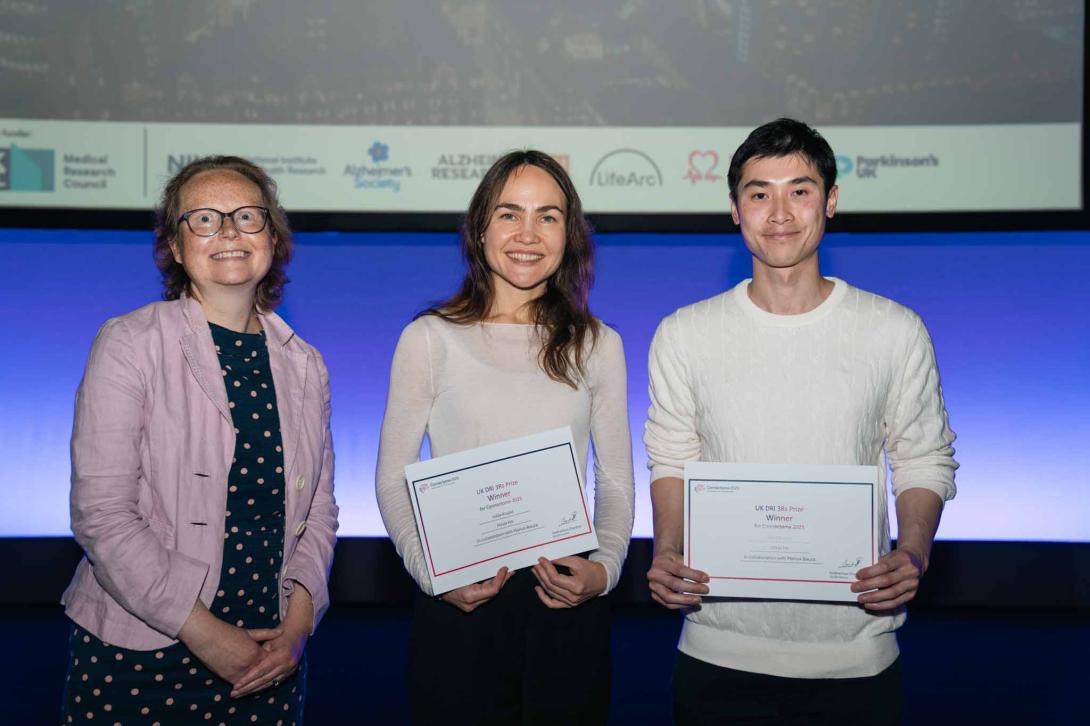
Julija and Hinze receiving their awards
Engagement Prize
Highlighting initiatives and activities in public engagement and patient involvement across the Institute.
This year’s winner was Nathasia Muwanigwa (UK DRI at UCL) for ‘Miss Myrtle's Garden: A community conversation on dementia’. Nathasia worked with organisers of Miss Myrtles Garden, a play which tells the story of a Black Jamaican woman living with dementia, and led a community discussion event to inform the audience about dementia, with a panel of Black dementia researchers. 60 attendees from black African and Caribbean communities attended.
Judges described it as a "fantastic example of engagement carried out in an inclusive, welcoming and accessible way," that created a"real sense of community and storytelling."
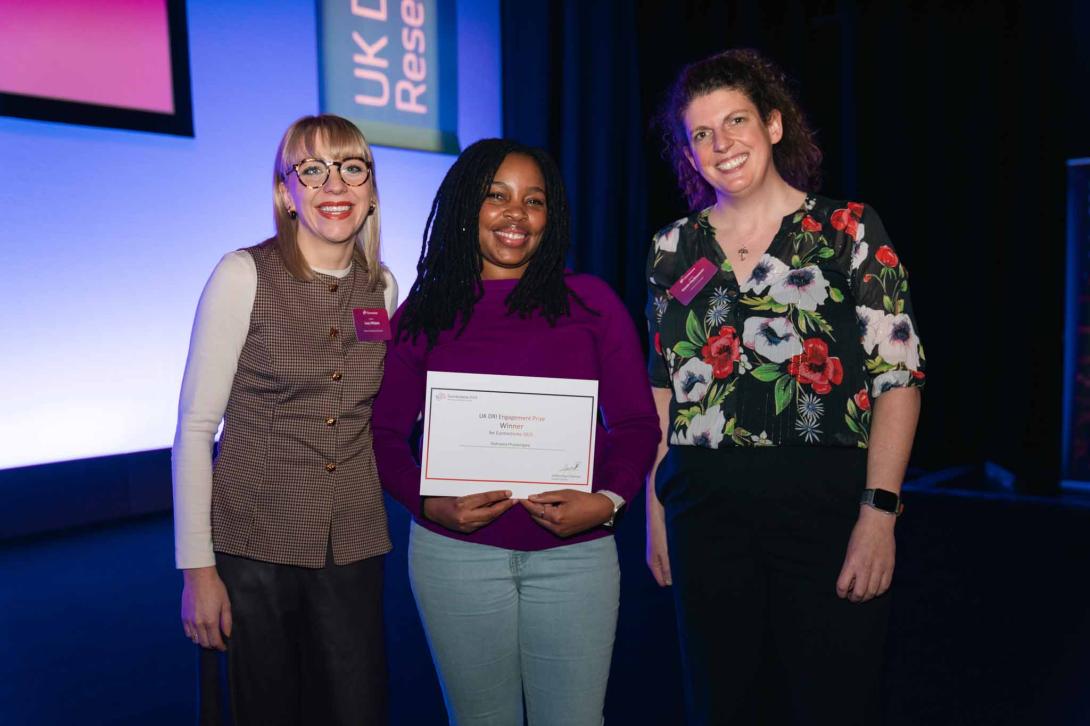
Nathasia receiving her award from Lucy Wilson and Sarah McGlasson
Science Imaging Prize
Showcasing eye catching images from across the UK DRI.
We had 6 incredible shortlisted images this year, some telling a story of how neurodegenerative disease impacts the brain, others showing how the brain protects itself. Our winner was Shekhar Kedia (UK DRI at Cambridge) who’s image ‘‘Brain Alert: When Neurons Call for Help” won the public vote on LinkedIn.

Shekhar's winning image