Key details
Taking MND discoveries into trials
Motor neuron disease (MND) is a devastating neurodegenerative condition, which causes progressive muscle weakness due to the degeneration of motor neurons in the brain and spinal cord. It is ultimately fatal, with an average life expectancy of just 2-3 years.
With only one licensed drug since 1995 that provides a modest extension of life by 2 months, over 125 failed trials and less than 10% of people with MND currently taking part in trials, there is an urgent need for advancements in research and therapeutic options.
The goal of the Pal Lab is to create an efficient way to take new MND discoveries from the lab into evidence-based clinical trials, and to use results from those trials to rapidly inform future research.
Latest news


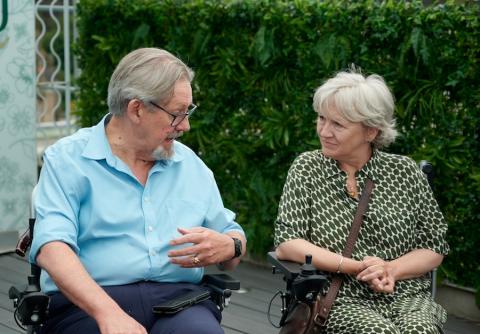
Prof Suvankar Pal
Prof Suvankar Pal is a Group Leader at the UK DRI at Edinburgh. Find out more about his career and expertise on his profile page.

Research summary
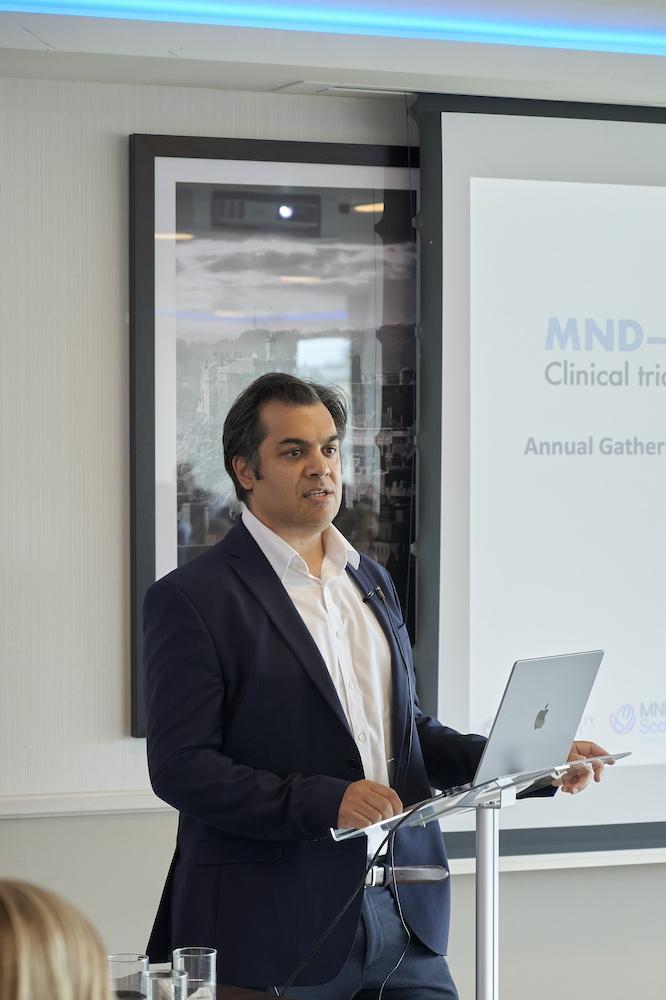
Prof Suvankar Pal presenting at the annual MND-SMART gathering
Delivery of innovative trials, experimental medicine, and biomarker discovery
Motor neuron disease (MND) is a devastating neurodegenerative disease (NDD) presenting with wide phenotypic heterogeneity and on a clinicopathological continuum with frontotemporal dementia. Despite major recent strides in elucidation of the complex fundamental pathobiology of MND, riluzole remains the only globally approved disease modifying therapy, prolonging survival by 2-4 months, underscoring the urgent unmet need for expeditious and definitive identification of new therapies.
MND SMART heralds a new era of innovative trials for progressive NDDs. It is a multi-arm, multi-stage (MAMS), adaptive, double-blind, multi-centre, randomised, Phase 3, contemporaneously placebo-controlled platform trial. Following launch in February 2020 >1000 participants have been randomised from 25 sites in all four UK nations. An inter-disciplinary team of clinicians, trialists, neurodegeneration scientists, human stem cell biologists and drug discovery experts are delivering a multi-modal approach to drug selection for MND SMART. The initial focus is centred on large repurposing libraries as these drugs have an established safety and regulatory record.
The absence of accessible biomarkers of target engagement and disease progression have attenuated progress in precision medicine trials for MND. MND SMART has delivered a highly curated randomised longitudinal bioresource comprising DNA, plasma, serum, post-mortem brain/spinal cord/CSF providing a powerful platform for reverse translation and mechanistic studies.
The Pal Lab aims to deliver a streamlined approach for moving mechanistic understanding of MND into evidence-based clinical trials and in accelerating clinical trial data to dynamically inform discovery science.
Programme objectives:
- To identify new drugs via multi-modal screening approaches, and test them in MND-SMART
- To evaluate repurposed drugs in biomarker-driven, dose-ranging, placebo-controlled, experimental medicine arms of MND SMART
- To drive a programme of reverse translation to identify and validate new disease biomarkers linked to the MND SMART cohort
- To develop and validate a digital, acoustic biomarker for MND and dementia for measuring disease heterogeneity, disease trajectory and response to interventions in clinical trials
Key publications
Vacancies
Lab members

Collaborators





Lab funders
Thank you to all those who support the Pal Lab!