Key details
Understanding the causes of white matter loss in vascular dementia
Small vessel disease is the leading cause of vascular dementia and is estimated to affect a third of people over the age of 80. It is characterised by damage to myelin, the fatty sheath which insulates and supports nerve cells in the brain. The Rajani Lab and others have shown how oligodendrocytes, the myelin forming cells in the brain, can become vulnerable to damage in small vessel disease. However, we still don’t fully understand how this damage occurs.
To investigate this, the Rajani Lab studies the mechanisms of interaction between blood vessels and oligodendrocytes, with a particular focus on the role that neuronal activity plays in modulating these interactions. Studying both inherited and sporadic forms of small vessel disease, and using both animal models and material from patients, the group aims to uncover novel targets for potential future therapies.
Latest news
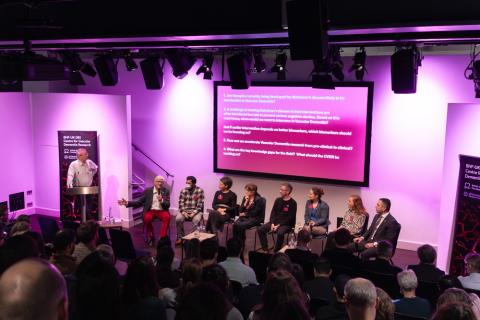

Dr Rikesh Rajani
Dr Rikesh Rajani is a Group Leader at the BHF-UK DRI Centre for Vascular Dementia Research. Find out more about his career and expertise on his profile page.

Research summary
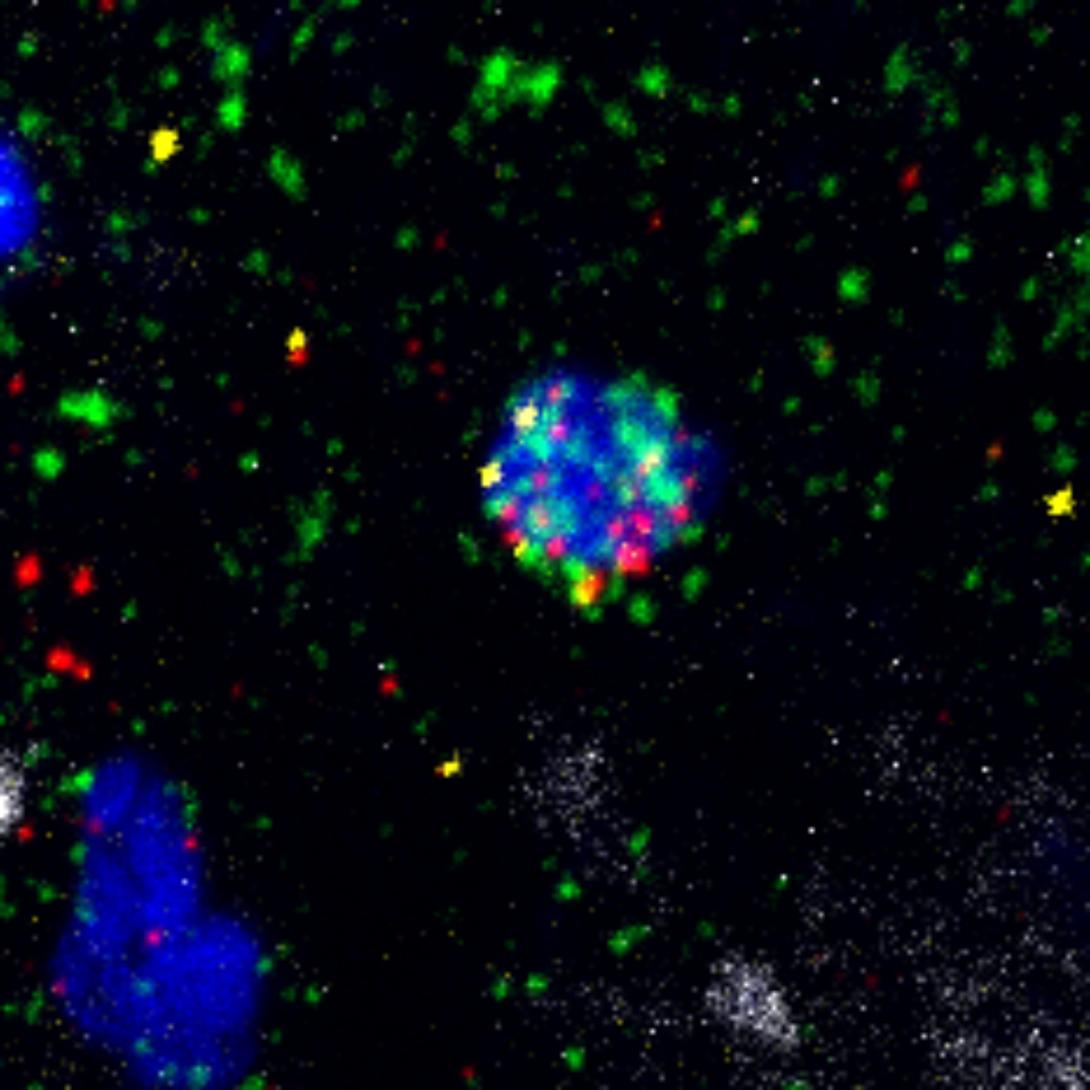
An oligodendrocyte in post-mortem human brain tissue (blue cell with green spots) expresses the genes (red and yellow spots) required to produce the amyloid beta protein which is implicated in Alzheimer's. Credit: Rikesh Rajani
Oligo-vascular interactions and neuronal activity in small vessel disease and dementia
White matter damage is a key hallmark of small vessel disease (SVD), and is correlated with cognitive decline. While the Rajani Lab have previously shown how endothelial dysfunction drives vulnerability of myelin forming oligodendrocytes in SVD, how this vulnerability translates into myelin damage and loss is still unknown. Dr Rajani's research aims to better understand how white matter damage happens in SVD, with the aim of ultimately discovering pathways that could in the future be targeted to treat the disease.
The team are particularly interested in the ways in which neuronal activity contributes to white matter changes in SVD, and how these white matter changes may in turn alter neuronal activity. They are also interested in the role which amyloid beta may play in mediating these interactions.
The key questions are:
- How does neuronal activity mediate white matter damage in SVD?
- How is neuronal activity altered in SVD?
- How do endothelial cell-oligodendrocyte interactions affect neuronal activity?
Building on previous work in this area the researchers use a range of techniques, including in vivo imaging, electron microscopy, human iPSC derived cells, and human tissue to address these questions.
Key publications
Vacancies
Lab members



Lab funders
Thank you to all those who support the Rajani Lab!