Key details
Deciphering RNA to rescue motor neurons
In recent decades, scientists discovered that many cases of motor neuron disease/ALS and frontotemporal dementia are caused by problems with proteins that control RNA - an essential molecule for cell function. In particular, proteins called TDP-43 and FUS can malfunction, leading to motor neuron death.
The Ruepp lab investigates exactly how these faulty proteins, especially FUS, cause disease. Their unique approach combines different research models to understand which specific features of FUS are toxic to motor neurons and what cellular processes go wrong as a result.
The team aim to find new treatment targets that could help everyone living with MND/ALS. While some cases are inherited due to gene mutations, 90% occur without a clear genetic cause. Yet all types of ALS result in motor neuron death, suggesting common disease mechanisms. The lab uses stem cell models with different ALS-causing mutations to identify these shared pathways.
Most excitingly, the Ruepp Lab is already testing potential new therapies based on their discoveries. By understanding the fundamental biology of how RNA-binding proteins contribute to motor neuron death, they aim to develop treatments that could benefit both people affected by MND/ALS and FTD .
Latest news
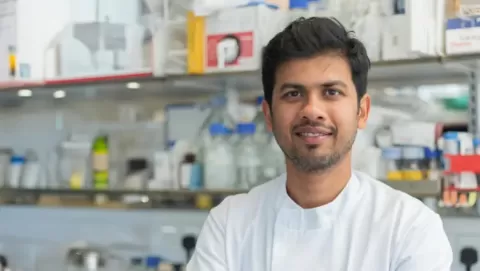
Marc-David Ruepp
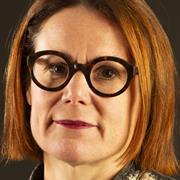
Marc-David Ruepp is a Group Leader at the UK DRI at King's. Find out more about his career and expertise on his profile page.
Research summary
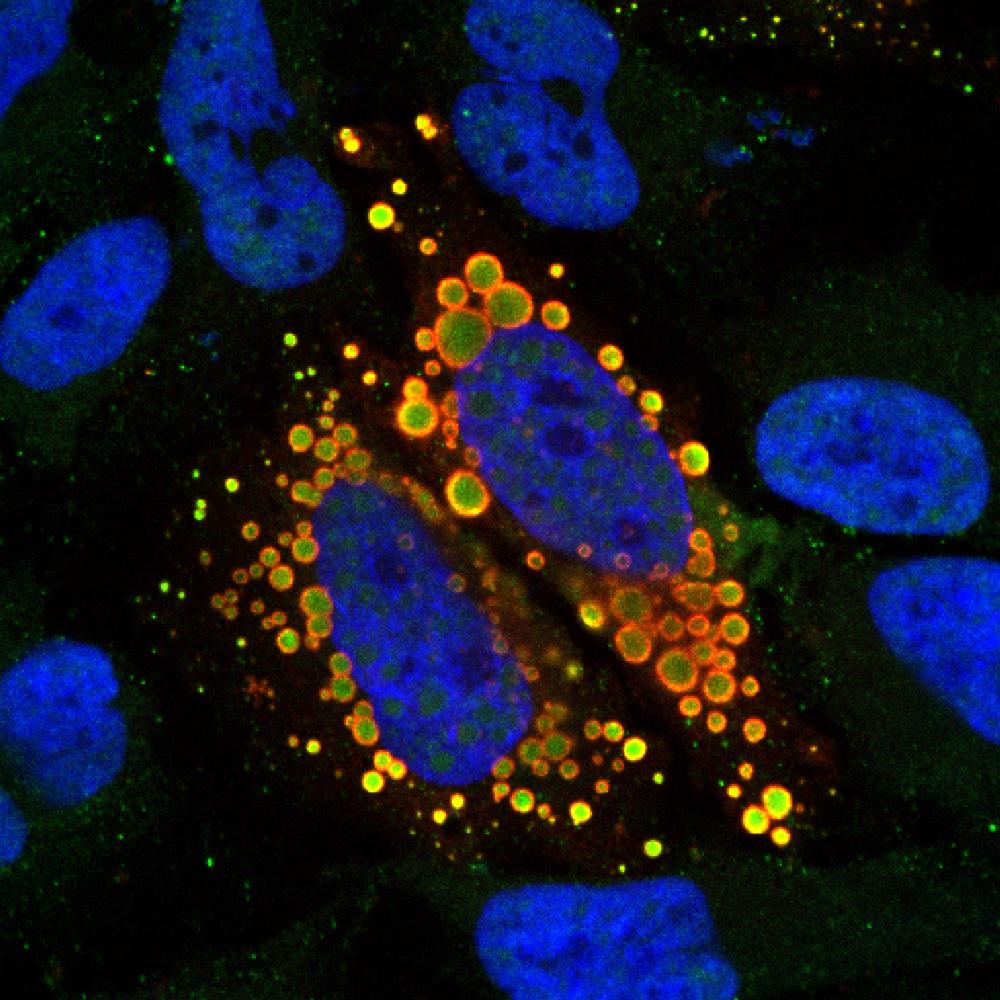
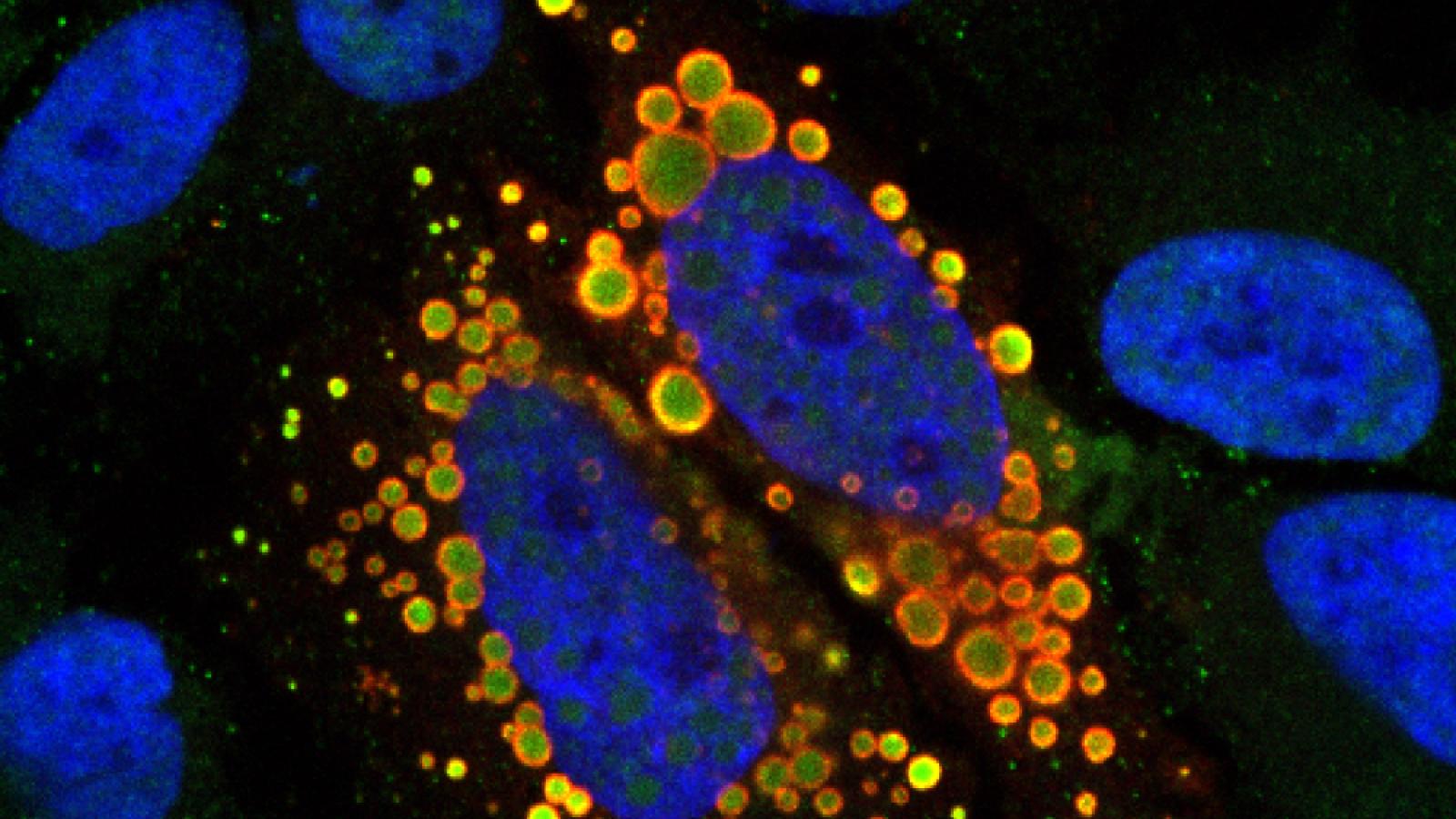
Cytoplasmic mutant TAF15 (red) engulfs U12 snRNAs (green) in the cytoplasm of HeLa cells.
Credit: Tatjana Zoller, Ruepp Lab
Targeting altered RNA metabolism in neurodegeneration
During the last three decades, a variety of neurodegenerative diseases were discovered to be caused by mutations in RNA-binding proteins and altered RNA metabolism appeared on the stage of potential pathomechanisms in neurodegeneration. Amyotrophic Lateral Sclerosis (ALS) and Frontotemporal dementia (FTD) are extreme ends of the ALS-FTD disease spectrum and represent such progressive, fatal neurodegenerative diseases in which altered RNA metabolism is strongly implicated.
Many cases of ALS/FTD are caused by mutations or mislocalisation of RNA-binding proteins such as TDP-43, FUS, as well as by hexanucleotide repeat expansions in the C9ORF72 gene, resulting in the expression of toxic hexanucleotide repeat RNA. The importance of RNA metabolism for neuronal homeostasis is further implicated by the fact that cytoplasmic inclusions of the RNA-binding proteins TDP-43 and FUS are present in approximately 98% of ALS and 54% of FTD cases. While TDP-43 mislocalisation is caused in rare cases by mutations, most cases of TDP-43 pathology are idiopathic. Conversely, FUS-linked ALS arises from mutations in the FUS gene and causes early onset ALS. These mutations typically disrupt the nuclear localisation signal (NLS), leading to cytoplasmic mislocalisation followed by the formation of FUS aggregates in neurons and glial cells. While nuclear loss-of-function has been clearly linked to ALS with TDP-43 pathology, mutant FUS causes motor neuron degeneration via a cytoplasmic toxic gain-of-function. However, the molecular determinants of this toxicity are unknown.
Main objectives and research goals
- Elucidating molecular determinants of FUS toxicity in ALS: We investigate these determinants using in vitro and in vivo disease models combined with rationally designed point mutations to dissect which features of FUS contribute to cytoplasmic toxicity and which cellular pathways are dysfunctional as a direct consequence thereof.
- Identifying translational targets for ALS independent of disease aetiology: Although ALS is heterogeneous with several genes being implicated in disease aetiology, 90% of all ALS cases are sporadic without clear genetic linkage. Nonetheless, all mutations and sporadic cases converge in selective motor neuron death, implicating a shared pathomechanism. Therefore, we are generating and using isogenic de-novo ALS iPSC models across multiple ALS genes to identify converging pathways and novel targets.
- Testing novel targets and approaches for translation: Based on our insights gained from the above work packages, we work towards elucidating the therapeutic and translational potential of new targets and approaches and have started our first pre-clinical studies for ALS/FTD.
Specific techniques
- Splicing modulation using modified snRNAs
- Liquid-liquid phase separation assays
- Microscale Thermophoresis
- qRT-PCR
- Immunoprecipitation
- Affinity purification of proteins/protein complexes
Key publications
Vacancies
-
Key details
- Location UK DRI at King's
- Salary: £39,076 - £43,909 per annum
- Lab: Professor Marc-David Ruepp
About us
Dementia is one of the greatest health challenge of our century. To date there is no way to prevent it or even slow its progression, and there is an urgent need to fill the knowledge gap in our basic understanding of the diseases that cause it.The UK Dementia Research Institute (UK DRI) is the biggest UK initiative driving forward research to fill this gap.Researchers at the UK DRI at King’s use innovative approaches to explore the biological mechanisms involved in neurodegenerative diseases. Their goal is to defeat dementia by uncovering vital new knowledge that will lead to the design of smarter diagnostics and effective treatments. The team aim to understand the fundamental biological processes involved in dementia at a molecular level – and to use that knowledge to design new ways to diagnose and treat disease more precisely.Join the forefront of dementia research at the UK Dementia Research Institute (UK DRI) at King's College London, where our vibrant and interdisciplinary research community is dedicated to unravelling the complexities of with the most common types of motor neuron disease, amyotrophic lateral sclerosis, and frontotemporal dementia.As part of the Department of Basic and Clinical Neuroscience, the UK DRI at King’s focuses on innovative cellular, molecular, and computational research to advance our understanding of neurodegenerationAbout the role
We are seeking an experienced and proactive laboratory professional to oversee the shared operations of the UK Dementia Research Institute research groups led by Professor Marc-David Ruepp and Dr Andrea Serio. This is a pivotal, non-experimental role focused on ensuring smooth day-to-day running of the laboratories, maintaining compliance and safety, and supporting two dynamic research teams.The postholder will be the key point of contact for lab organisation — taking ownership of ordering, stock management, rota coordination, and enforcement of good laboratory practice. They will have the confidence to develop and implement necessary changes, while maintaining professional and constructive relationships across both teams.This role is ideal for an experienced technical professional with a strong background in laboratory management and operations. Applicants with a commitment to maintaining a high-performing, well-organised laboratory are strongly encouraged to apply. Applicants must have prior hands-on experience in similar technical roles, as this is essential for success. The position is focused on technical and operational responsibilities. Please note that it is not a pathway to a PhD and will not include training needed for a research-focused career.About you
To be successful in this role, we are looking for candidates to have the following skills and experience:Essential criteria- Extensive prior experience in coordinating day-to-day laboratory operations within a research, clinical, industrial, or equivalent technical environment, including responsibility for rota coordination, stock and inventory oversight, equipment maintenance scheduling, supplier liaison, facilities coordination, and purchasing processes.
- Demonstrated experience ensuring adherence to laboratory policies, procedures, and standards across staff and students who are not direct reports, including confidence in advising, instructing, and, where necessary, challenging or correcting practice to maintain a safe and compliant working environment.
- Proven capability to manage concurrent tasks and operational demands independently, exercising sound judgement, discretion, and appropriate escalation when necessary.
- Exceptional organisational skills and clear, professional communication, with consistent attention to accuracy and detail in documentation and record-keeping.
- Proven ability to deal with operational challenges constructively and diplomatically, supporting colleagues, resolving issues in real time, and contributing to continuous improvement in laboratory practices.
- Working knowledge of procurement and inventory systems, laboratory safety procedures, and relevant regulatory or compliance frameworks, with the ability to ensure these are maintained and updated in practice.
Desirable criteria- Prior experience supporting or managing multiple principal investigators or teams.
- Familiarity with biological or molecular biology laboratories.
- Experience in wet lab work
Lab members
- Dr Niamh O’Brien (Postdoctoral Researcher - jointly with Dr Sarah Mizielinska)
- Dr Deepak Khuperkar (Postdoctoral Researcher)
- Dr Emma Dyke (Postdoctoral Researcher - jointly with Dr Caroline Vance)
- Richard Taylor (Postdoctoral Researcher)
- Juan Alcalde Gomez (PhD Student)
- Eleanor Wycherley (Research Assistant - jointly with Dr Sarah Mizielinska)
- Dr Christoph Schweingruber (Research Fellow)
- Dr Alessandro Galgiliardi (Research Fellow - with Pietro Fratta)
- Dr Daniel Solomon (Lady Edith Wolfson MNDA Junior Non-Clinical Research Fellow)
- Yujing Gao (Research Associate)
- Michaela Barioglio (Research Associate - with Pietro Fratta)
- Alexander Hofer (PhD Student - with Prof Oliver Muehlemann)
- Vaishnaivi Manohar (PhD Student - with Dr Jemeen Sreedharan)
- Sara Tacconelli (PhD Student - with Dr Caroline Vance)
- Sofia Konstantinidou (PhD Student - jointly with Dr Sarah Mizielinska)
- Emma Salmela (PhD Student - jointly with Prof Chris Shaw)
- Hamish Crerar (Senior Researcher)
Collaborators
Lab funders
Thank you to all those who support the Ruepp Lab!