
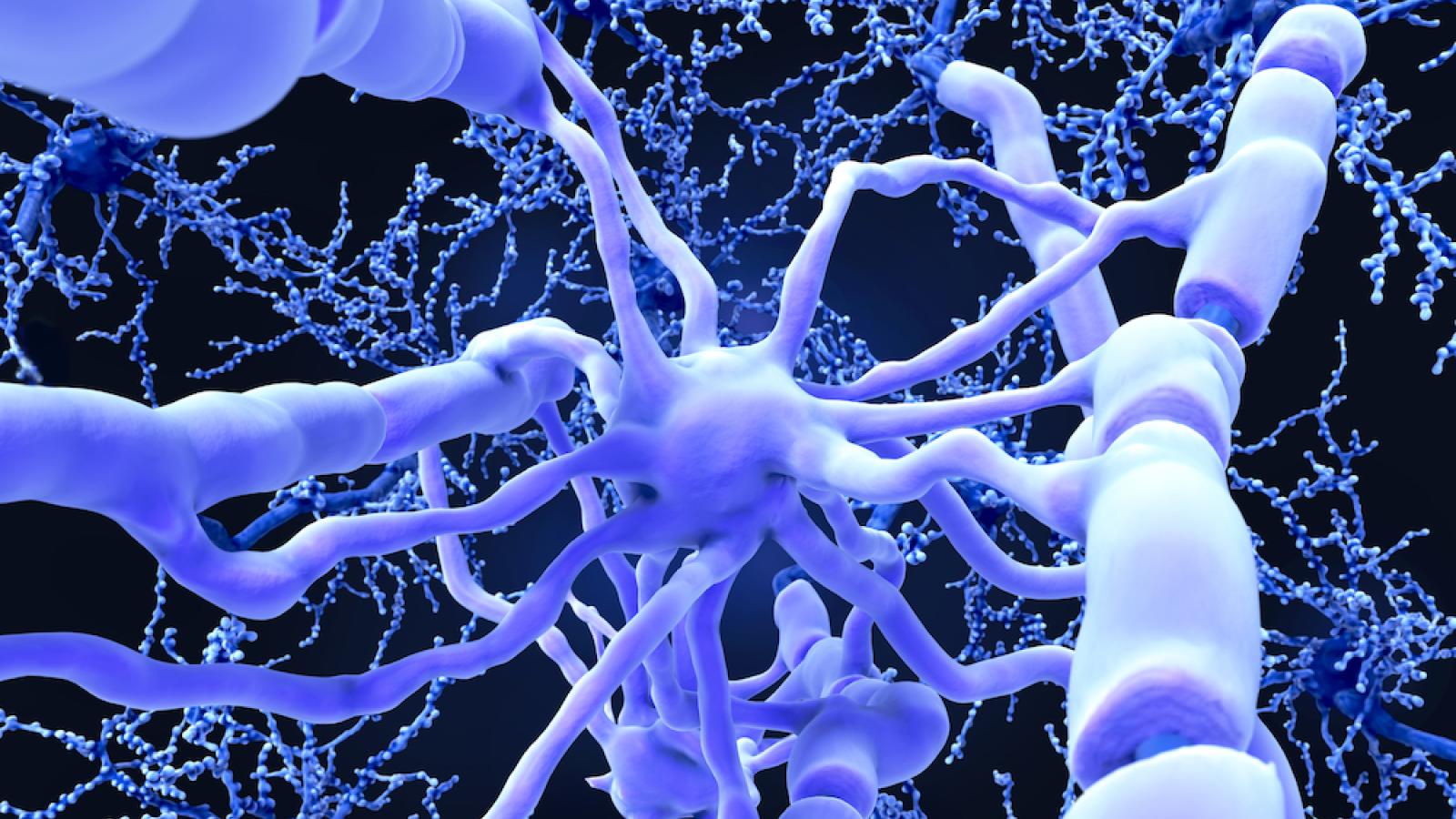
New research led by Dr Georgina Craig and Prof Veronique Miron (UK DRI at Edinburgh) finds brain cells that produce the protective coating around nerve fibres can become dysfunctional with age and may actively contribute to cognitive decline. The research, published in Nature Medicine, could pave the way for new treatments targeting oligodendrocyte dysfunction to help protect cognition in later life.
Researchers initially analysed brain tissue from the Lothian Birth Cohort 1936, whose members have had their cognitive abilities assessed from childhood into older age. Cognitive performance was measured from age 70 to 82 using tests covering memory, processing speed and spatial skills.
Of 1,091 people in the cohort, 866 had follow-up cognitive testing after age 70. Almost all experienced some degree of cognitive decline, allowing researchers to compare brain changes in people whose decline was faster or slower than average.
When looking directly at post mortem brain tissue from a subset of participants, they found that more severe cognitive decline was associated with fewer large nerve fibres and excess, unhealthy myelin - the protective coating around nerve fibres that helps messages travel efficiently through the brain - particularly around the larger fibres that remained. These changes were linked to the rate of cognitive decline rather than a person’s cognitive ability at any particular time.
The researchers then found that people with more severe cognitive decline had reduced levels of the protein NRF2 in oligodendrocytes (myelin producing cells). NRF2 regulates hundreds of genes involved in protecting cells from damage and maintaining healthy cellular function. Experiments in mice showed that reducing NRF2 specifically in oligodendrocytes caused excess myelin and reduced large nerve fibres. It also impaired improvements in cognitive performance as the mice aged.
As the prevalence of cognitive decline is rising with an ageing population and no current treatments exist, we are excited about this work as it points to a potential strategy for new therapeutic strategies to preserve cognitive ability in ageing.
Group Leader
The findings suggest that reduced NRF2 activity can drive oligodendrocyte dysfunction, contributing to changes in myelin and nerve fibres associated with cognitive decline during ageing.
The NRF2 pathway is already targeted by drugs including one that treats multiple sclerosis (MS). Previous research has shown that activating NRF2 can improve cognitive function in people with MS, raising the possibility that existing treatments could eventually be repurposed to target oligodendrocyte dysfunction and cognitive decline in ageing.
Dr Georgina Craig, first author of the study and Postdoctoral Fellow at St Michael’s Hospital in Toronto and the UK DRI, said: “This study has fundamentally shifted how we think about these brain cells in ageing. We have always considered oligodendrocytes as purely beneficial, yet here we surprisingly find that they can become dysfunctional and contribute to cognitive impairment in ageing.”
The study was funded by the UKRI Medical Research Council (MRC) and the Canadian Institutes of Health Research (CIHR) and involved researchers from the University of Edinburgh’s Lothian Birth Cohort studies and Northwestern University Feinberg School of Medicine.
Links
- Source: University of Edinburgh
- Reference: Craig, G.A., Merour, E., Seeker, L.A. et al. Oligodendrocyte dysfunction in human age-related cognitive decline. Nat Med (2026). https://doi.org/10.1038/s41591-026-04608-y