
New research reveals how Parkinson’s spreads from the gut to the brain, with the help of immune cells – offering a new potential therapeutic strategy.
Scientists have long theorised that Parkinson’s may start in the gut. This is because one of the first brain areas to be affected in the condition is the dorsal motor nucleus of the vagus nerve, which connects directly to the gut. But scientists have not known how the condition spreads to the brain.
The new study identifies a key role for gut macrophages – a specialised immune cell that act as first responders, eating or ‘engulfing’ and destroying harmful invaders – in helping toxic proteins travel from the gut into the brain.
The research, led by scientists at the UK Dementia Research Institute at UCL, showed that reducing the number of gut macrophages led to reduced spreading of toxic protein, and improved motor symptoms in mice. Published in the journal Nature, and funded by the Chan Zuckerberg Initiative, the study suggests a new potential therapeutic approach for Parkinson’s that could enable intervention long before onset of motor symptoms.
Previous research has found that between 50-90% of people with Parkinson’s had gut symptoms long before their movement symptoms began, for example experiencing chronic constipation decades before diagnosis. Patients are grouped into ‘body-first’ and ‘brain-first’ depending on where disease starts, with the former accounting for around two thirds of people affected by Parkinson’s.
In the new study, the scientists isolated misfolded alpha-synuclein, the toxic protein implicated in Parkinson’s, from the brains of people who had died with Parkinson’s. They inserted tiny amounts of the patient-derived alpha-synuclein into the small intestines of mice and followed its spread from the gut into the brain.
They showed that gut macrophages engulfed alpha-synuclein, and began to show signs of dysfunction in their lysosomal systems, responsible for breaking down the cell’s waste material.
The researchers found that the macrophages then signalled to T cells, which are part of the body’s adaptive immune response. These “gut-instructed” T cells then travel from the gut, into the brain.
Importantly, when the researchers depleted the number of gut macrophages before injecting alpha-synuclein into the small intestine of mice, they found this resulted in reduced levels of toxic alpha-synuclein in the brain, compared to healthy controls – suggesting a possible therapeutic avenue: targeting these immune cells and preventing them from reaching the brain.
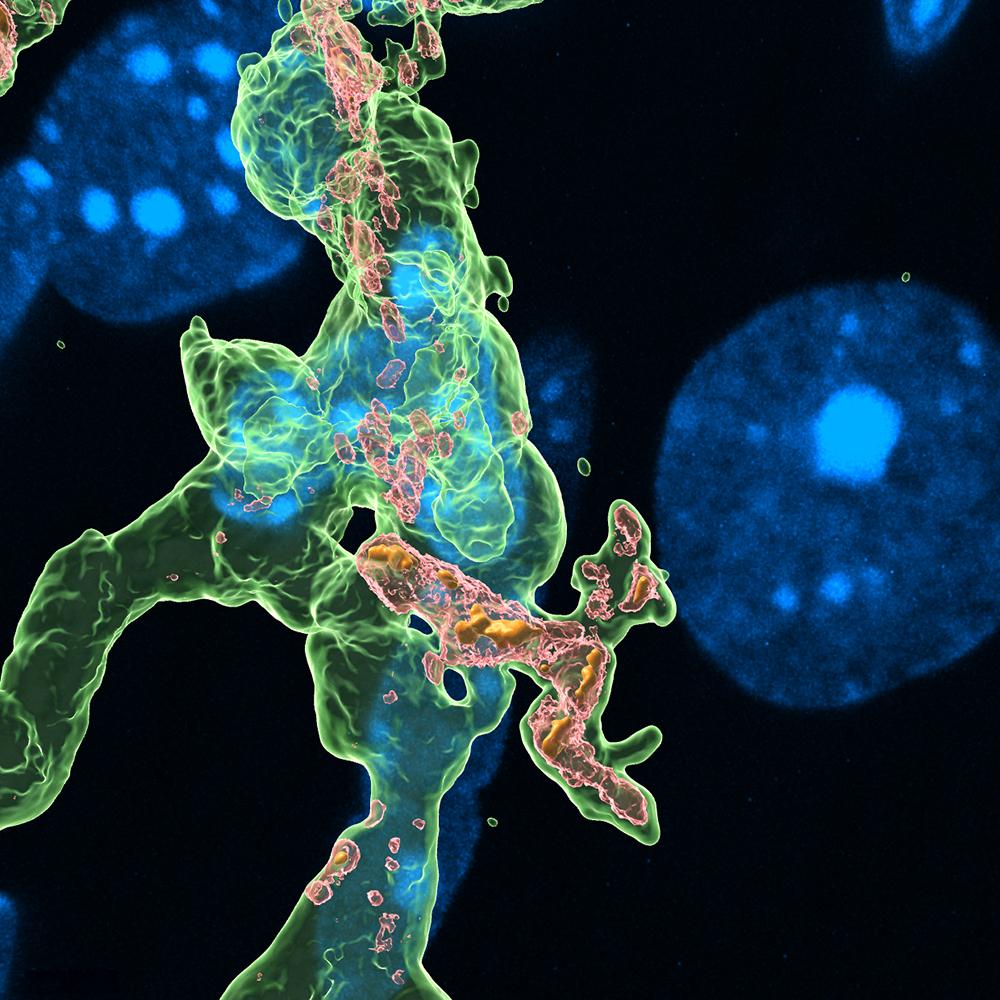
A macrophage (immune cell) engulfing the toxic alpha-synuclein protein. Credit: Hong/Bartels Lab, UK DRI at UCL.
Next, the team plan to look more closely at how the immune system in the body affects the brain in negative ways, and whether this could be harnessed to develop new drug targets. They will also investigate how to exploit markers of inflammation in the blood as early diagnostics for Parkinson’s.
Co-lead author Dr Soyon Hong, Group Leader at the UK Dementia Research Institute at UCL, said:
“Our study shows that immune cells are not bystanders in Parkinson’s, these gut macrophages are responding, albeit in a dysfunctional way. This presents an opportunity to think about how we can boost the function of the immune system and these cells, so that they respond in the correct manner and help to slow or stop the spread of disease.”
Co-lead author Dr Tim Bartels, Group Leader at the UK Dementia Research Institute at UCL, said:
“Neurodegenerative diseases have slow trajectories over decades. Understanding how Parkinson’s begins in the body could allow us to develop simple blood tests to screen for it, enabling diagnosis long before damage to the brain starts. Having the ability to detect and manage Parkinson’s before it even reaches the brain could have a huge impact for those affected.”
Reference
De Schepper, S., Konstantellos, V., Conway, J.A. et al. Intestinal macrophages modulate synucleinopathy along the gut–brain axis. Nature (2026). https://doi.org/10.1038/s41586-025-09984-y
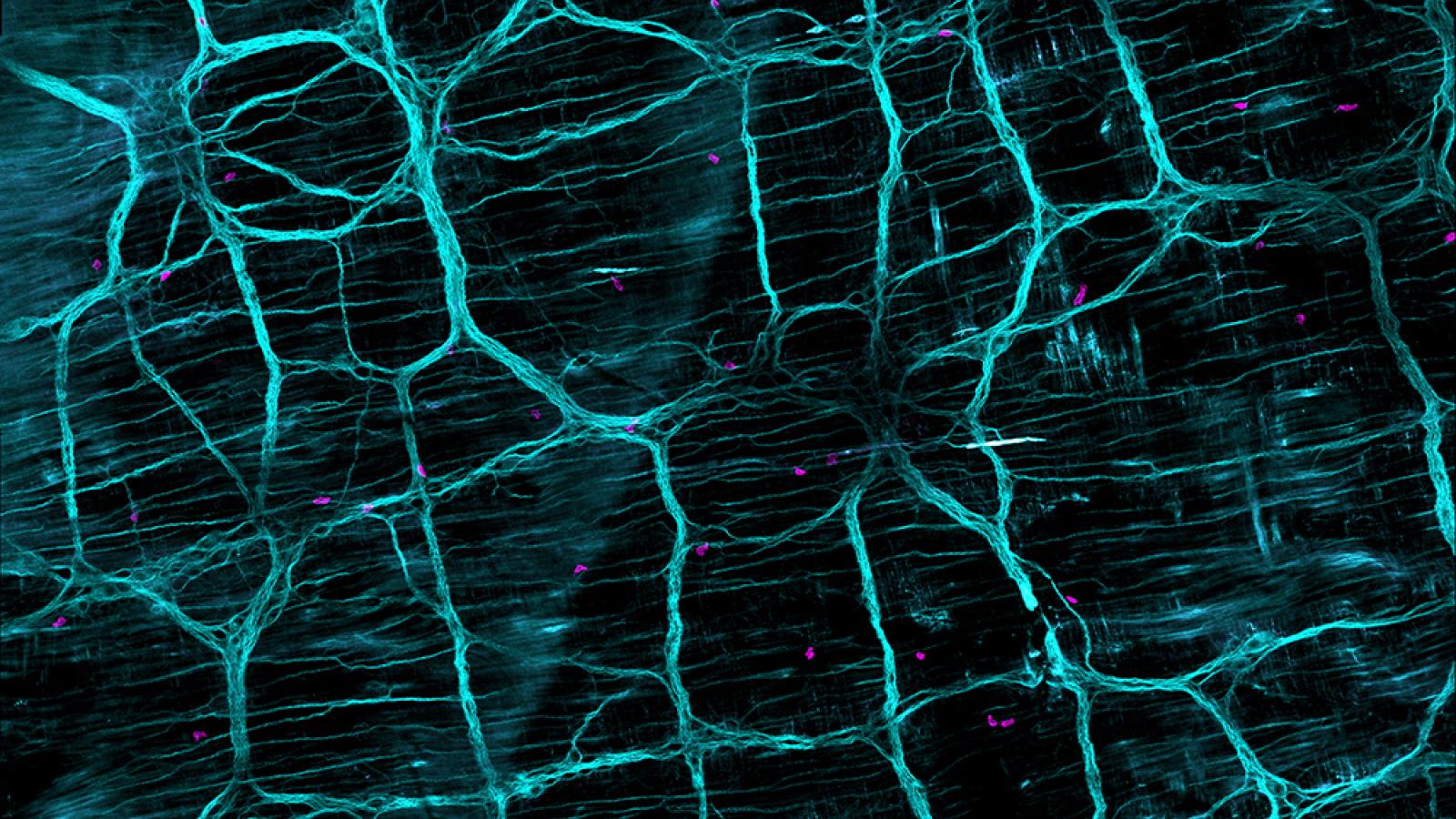
Banner image: The enteric nervous system in the gut with activated T-cells. Credit Hong/Bartels Lab, UK DRI at UCL.