A breakdown in communication – microglia’s role in neurodegenerative disease
There are an estimated 850,000 people living with dementia in the UK. Alzheimer’s disease (AD) is the most common cause and is characterised by the widespread loss of connections - synapses - between neurons. Communication is essential to brain function and without these links, neurons begin to die, and clinical symptoms appear, such as memory loss. It is not clear how synapses are lost in AD, but scientists are finding evidence that other types of cells in the brain may be playing a critical role.
The major resident immune cells in the brain, microglia, are heavily implicated in this extensive loss of synapses in AD. During development, microglia sculpt this complex network of connections while maintaining the brain architecture throughout our lives. In a disease like AD, it is thought unknown changes with age or the introduction of a cellular stress (e.g. abnormal protein) alter the role of microglia, perhaps causing them to become dysfunctional and phagocytose (‘eat’) surrounding synapses.
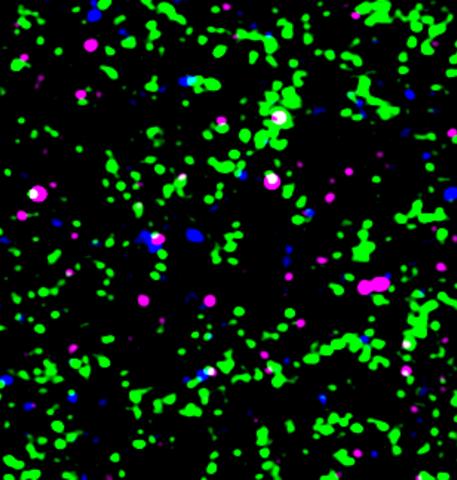
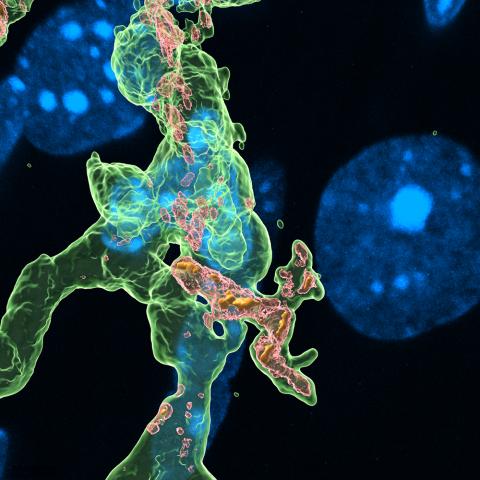
Dr Soyon Hong is a specialist in the relationship between microglia and synapses, and the Hong Lab is exploring these interactions in a disease context. Using cutting-edge microscopes and other tools, the team will explore whether certain synapses are vulnerable, and whether different subsets of microglia become dysfunctional in disease. The Hong Lab aims for identification of mechanisms that could then be targeted by therapeutics.
Latest news

Dr Soyon Hong
Dr Soyon Hong is a Group Leader at the UK DRI at UCL. Find out more about her career and expertise on her profile page.

Research summary
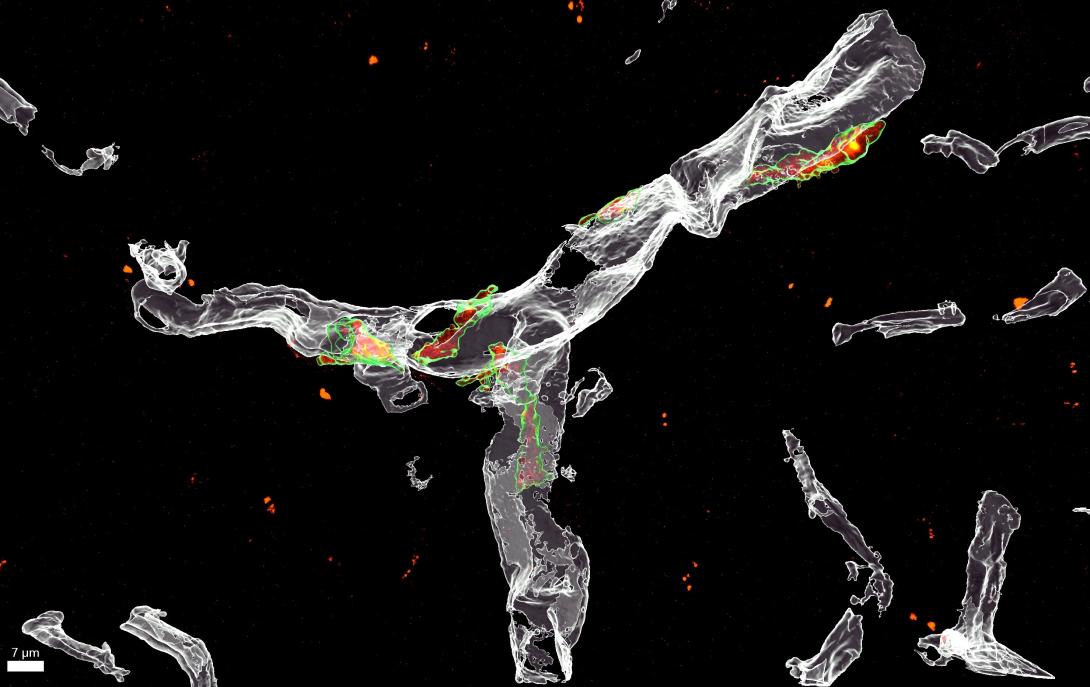
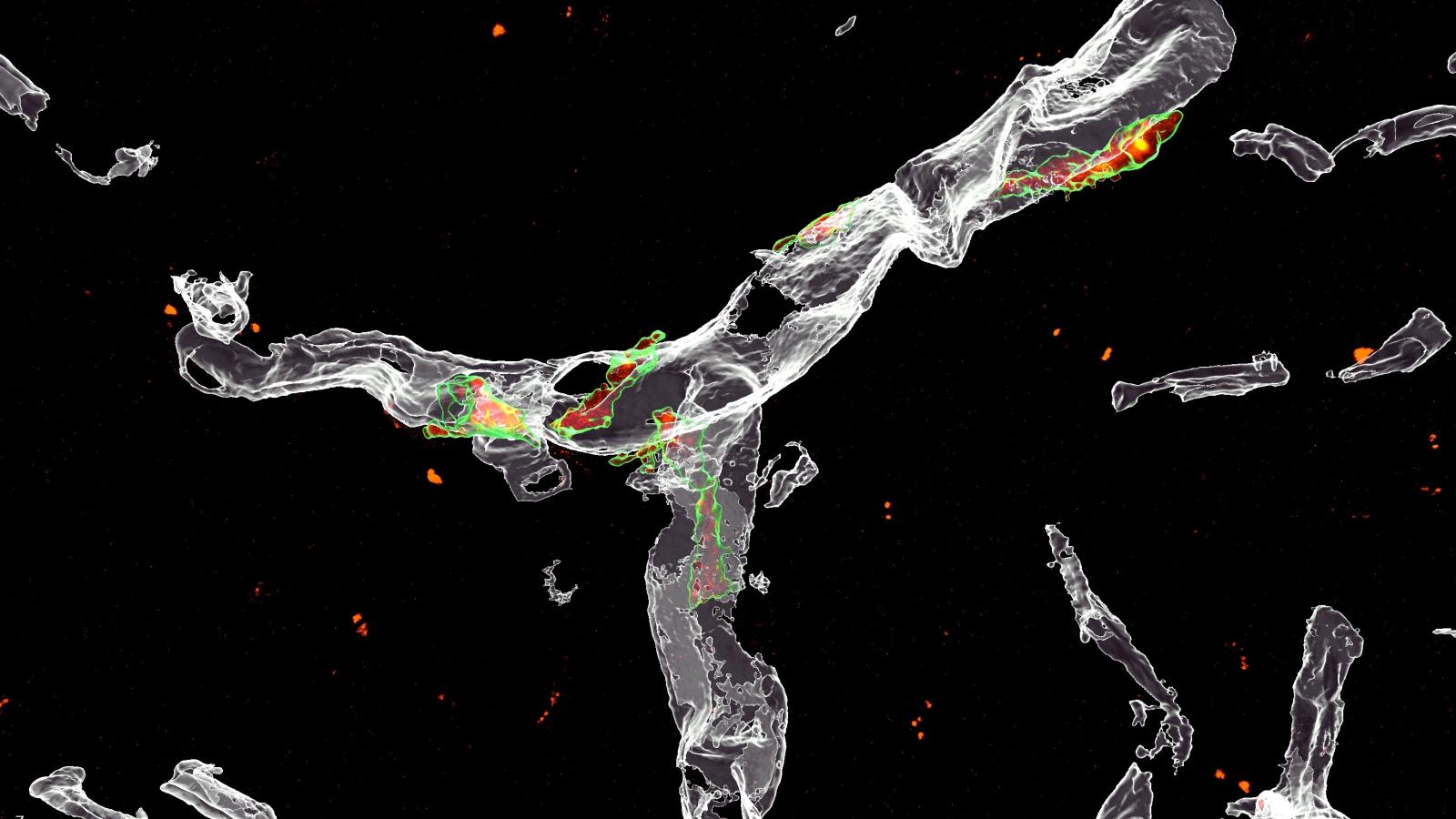
Three-dimensional reconstruction of perivascular macrophages Credit: Dr De Schepper
Immune mechanisms of synaptic function and pathology
Recent genome-wide studies implicate microglia and immune-related pathways in Alzheimer’s disease (AD); however, the biological significance of these immune pathways is not well understood. Interestingly, it is becoming increasingly clear that microglia are active partners in brain wiring, in that they help shape the developing brain and aid the breakdown of synaptic circuitry in disease. Loss of synaptic integrity is a hallmark of AD and several other neurologic diseases.
During her postdoctoral period, Dr Soyon Hong was among the first to propose microglia as critical players in synaptic pathology in various disease models. These findings raise the need to understand the immune basis of neurologic function and circuitry. Several questions have emerged: Do microglia specifically phagocytose dysfunctional synapses? What cues regulate microglial pruning? What molecules, besides complement, are utilised in neuroglial communication? The pathological functions of microglia reveal a need to fully understand what microglia do in the healthy adult brain and how they become dysfunctional with, or contribute to, ageing and dementia.
Soyon’s research will broaden our understanding of how different cell types work together to maintain brain function, and how these interactions may go awry during ageing and dementia. Furthermore, the goal will be to extend this into translational research relevant to humans. As region-specific vulnerability is a hallmark of many neurodegenerative diseases, the proposed experiments have the potential to reveal mechanistic insight in a variety of neurological diseases.
Main objectives and research goals:
In Soyon’s UK DRI programme, she aims to address these questions from several unique angles:
- Investigate molecular pathways that target synapses for elimination in models of Alzheimer’s disease, Parkinson’s disease, FTD/ALS and others, and determine whether microglia confer region-specific synaptic and neuronal dysfunction.
- Study whether and how microglia contribute to higher cognitive functions, i.e. learning and memory.
- Increase understanding of how adaptive immune signalling contributes to neuroglial interactions in the adult brain, in the context of normal ageing and neurodegenerative diseases.
Key publications
Vacancies
Lab members



Collaborators









Lab funders
Thank you to all those who support the Hong Lab!