
Two UK DRI-led projects have been funded by the new Dementia Challenge, which aims to accelerate the adoption of innovative technologies and practices that will diagnose and predict how the disease will progress.
Funded by the Department for Business, Innovation, Science and Trade (BIST) via UKRI's Research & Development Missions Accelerator Programme (R&D MAP) programme, it aims to help people and their families get earlier and more accurate diagnosis of dementia, and better understand what a dementia diagnosis means for their lives. Backed by up to £80 million, the goal is for 92% of people to be diagnosed within 18 weeks of a referral.
Early diagnosis can reduce the likelihood of emergency hospital admissions and delay the need for greater care support, reducing the impact of dementia on services within the NHS. It may also allow patients to receive treatment sooner, and make informed decisions about work, care, finances and family life.
We are delighted that UKRI's Dementia Challenge is backing two UK DRI-led projects: one bringing Minder, our AI-enabled home monitoring service, to new NHS regions including rural and coastal communities, and another cutting the time and cost of diagnostic MRI so that more people can access it.
Director & CEO
Nine projects have been chosen to move into real-world testing in the NHS, of which two are led by UK DRI researchers:
Minder: Supporting a digitally enabled care pathway for people living with dementia
Led by Prof David Sharp, UK DRI Centre for Care Research & Technology
Minder is the UK DRI’s flagship digital care platform, developed to support people affected by dementia to remain living safely at home. Small, unobtrusive sensors installed around the home gather data to spot early warning signs and prevent problems turning into crises. With funding from LifeArc and support from Imperial NIHR Biomedical Research Council, the system now operates as a live NHS service, MinderCare, delivered in partnership with Imperial College Healthcare NHS Trust in North West London. Working with the Dementia Challenge, the team will build the robust, national-scale evidence the NHS needs to invest in Minder and MinderCare with confidence. The service will expand into new NHS regions including rural and coastal communities, comparing outcomes against standard of care.
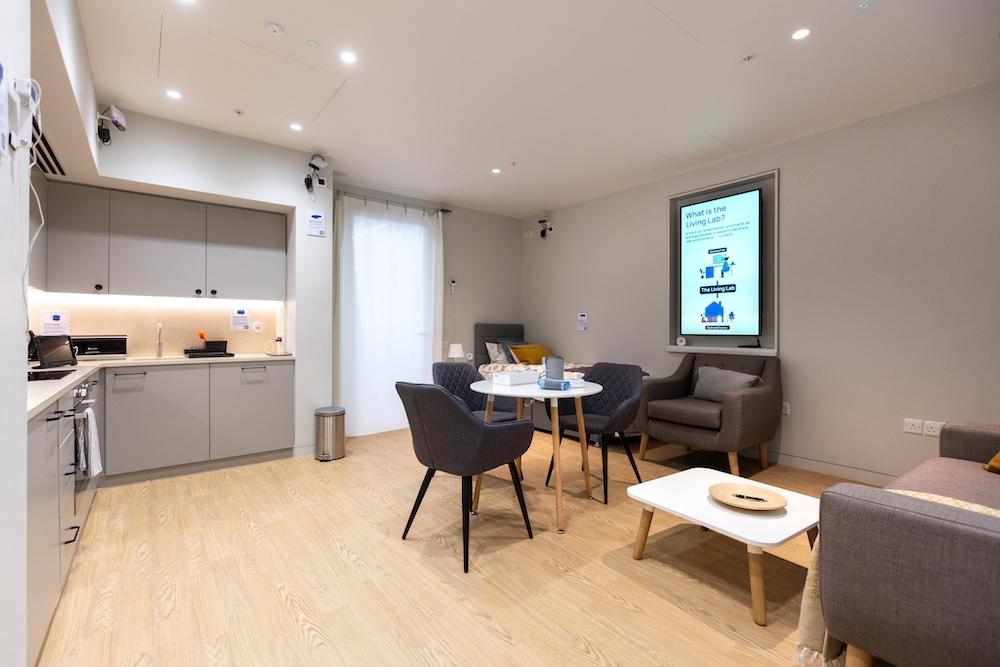
The Living Lab, where Minder technology is developed and evaluated before being deployed into participants' homes.
Reducing MRI scan times, improving access to diagnostic MRI scans and reducing costs
Co-led by Prof Nick Fox, UK DRI at UCL (led by Prof Geoff Parker, UCL) as part of the RADIANCE team
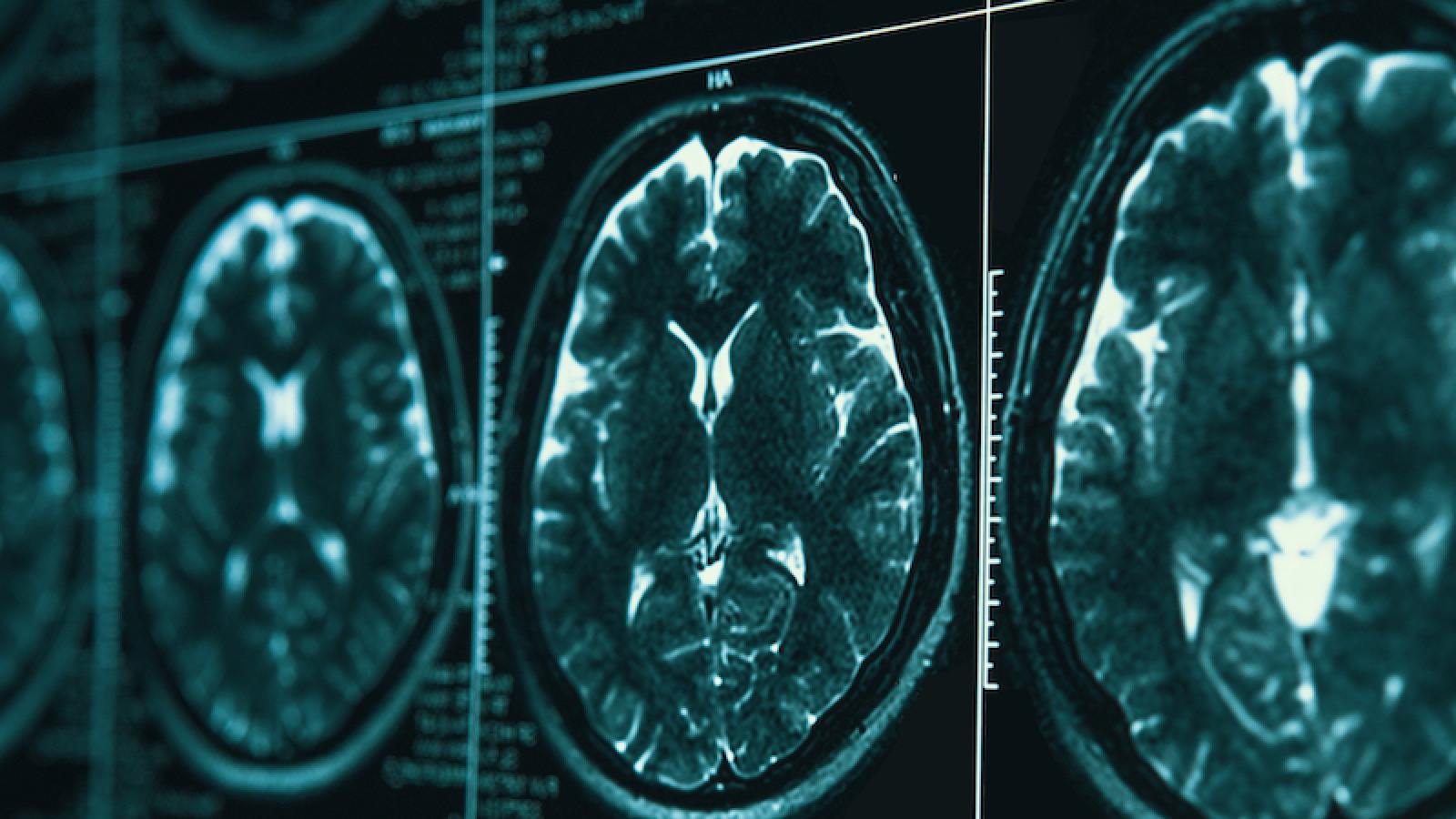
MRI scans play a key role in an accurate dementia diagnosis. Emerging disease-modifying treatments such as lecanemab and donanemab also require an MRI scan before starting treatment and for safety monitoring during treatment. However, MRI scans are expensive, and limited capacity means waiting times are often lengthy. In this study, the RADIANCE team will evaluate the use of an innovative new AI-powered MRI protocol which shortens MRI scan times from 20-30 minutes to around seven minutes. Not only would a shorter protocol save money and time, but faster scans are also much easier and better tolerated by people with dementia who often have difficulty keeping still and lying flat for lengthy scans. Supported by the Dementia Challenge, this project will gather real-world evidence of the utility and practicality of ultra-fast MRI, as well as determining the economic case for ultra-fast MRI for dementia. The evidence gathered will support the roll-out of ultra-fast MRI across the UK.
Prof Siddharthan Chandran, UK DRI Director, said:
"As a practising neurologist, I see every day what a timely diagnosis and the right support at home can mean to people living with dementia and their families. We are delighted that UKRI's Dementia Challenge is backing two UK DRI-led projects: one bringing Minder, our AI-enabled home monitoring service, to new NHS regions including rural and coastal communities, and another cutting the time and cost of diagnostic MRI so that more people can access it.
As an MRC institute, our goal is to transform the outlook for people with dementia, and this is how we do it: turning world-leading UK science into care and diagnostics the NHS can deliver at scale."
UKRI is adopting a fail-fast approach for this programme, where projects need to achieve results and reach milestones to receive funding so only those showing real promise continue to receive support.
To deliver the challenge UKRI is partnering with industry, academia, the NHS, Medicines and Healthcare products Regulatory Agency (MHRA), National Institute for Health and Care Excellence (NICE), the Health Innovation Network and the third sector to identify, develop, validate, and implement clinical interventions and technological innovations for the NHS and social care.
UKRI Health Mission Challenge director Andy Hill said:
"By developing better diagnostic and prognostic tools, we can help people to living with dementia understand and manage their symptoms, get earlier access to treatment and plan for their futures. That will mean better lives for people living with dementia and for their family and carers.
"More people die as consequence of dementia than any other disease in the United Kingdom, accounting for almost one in eight deaths. In 2025, over 72,000 people across the UK died from dementia, including Alzheimer's disease."
Source: UKRI