
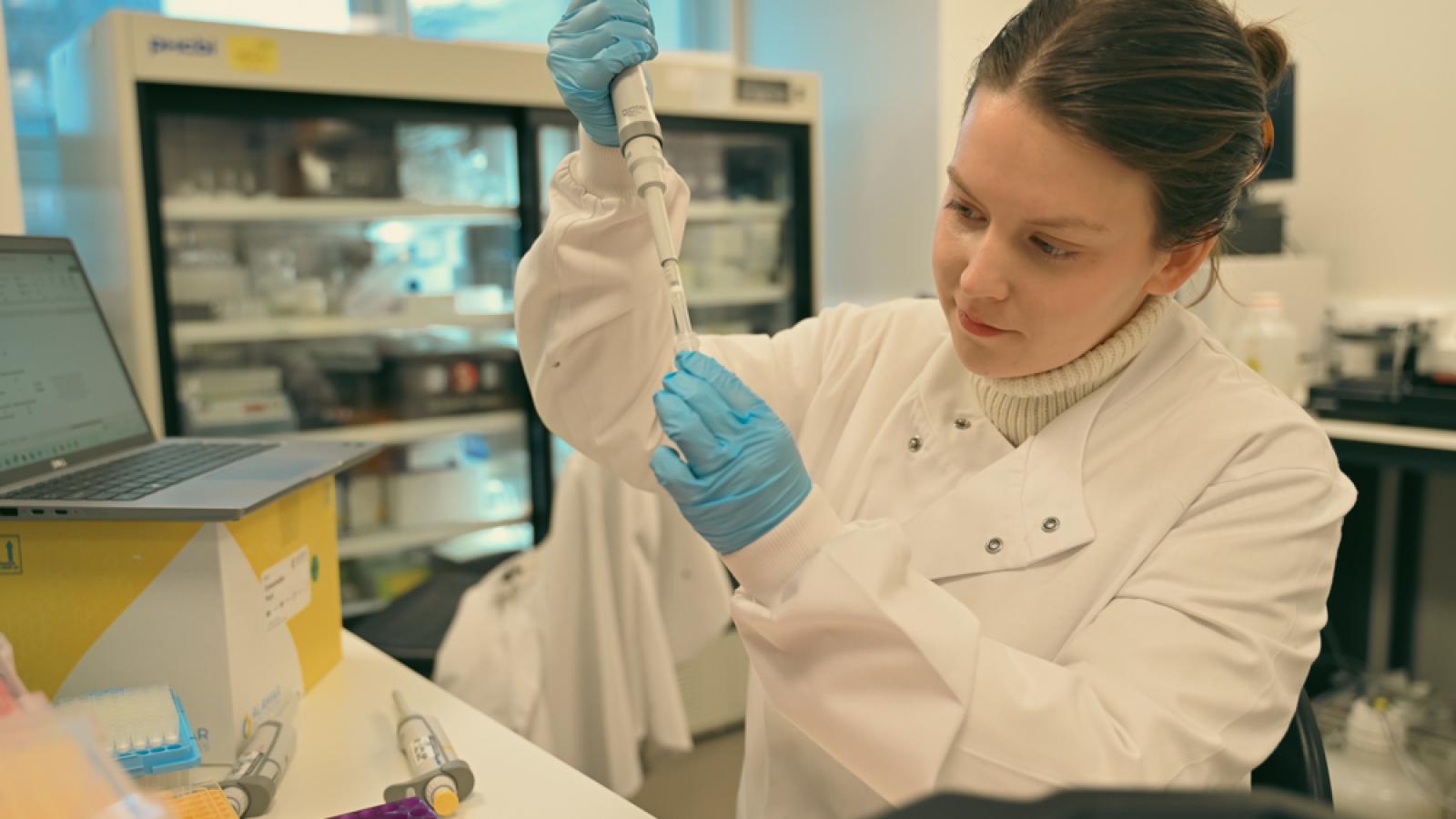
From welcoming new leaders and launching major centres, to advancing discoveries in the lab and delivering impact in the clinic, our researchers continued to push the boundaries of what is possible in understanding, preventing and treating neurodegenerative conditions. Here, we reflect on some of the highlights from across the Institute.
Building an outstanding community
This year, we welcomed many new faces to our growing community. We launched the Parkinson’s Research Centre in partnership with Parkinson’s UK, appointing world-leading Parkinson’s expert Prof Miratul Muqit as Director. We also celebrated the official launch of our BHF-UK DRI Centre for Vascular Dementia Research (CVDR) with the British Heart Foundation, alongside the appointment of four new Group Leaders: Dr Rikesh Rajani, Dr Mootaz Salman, Prof Susanne van Veluw and Prof Catherine Hall.
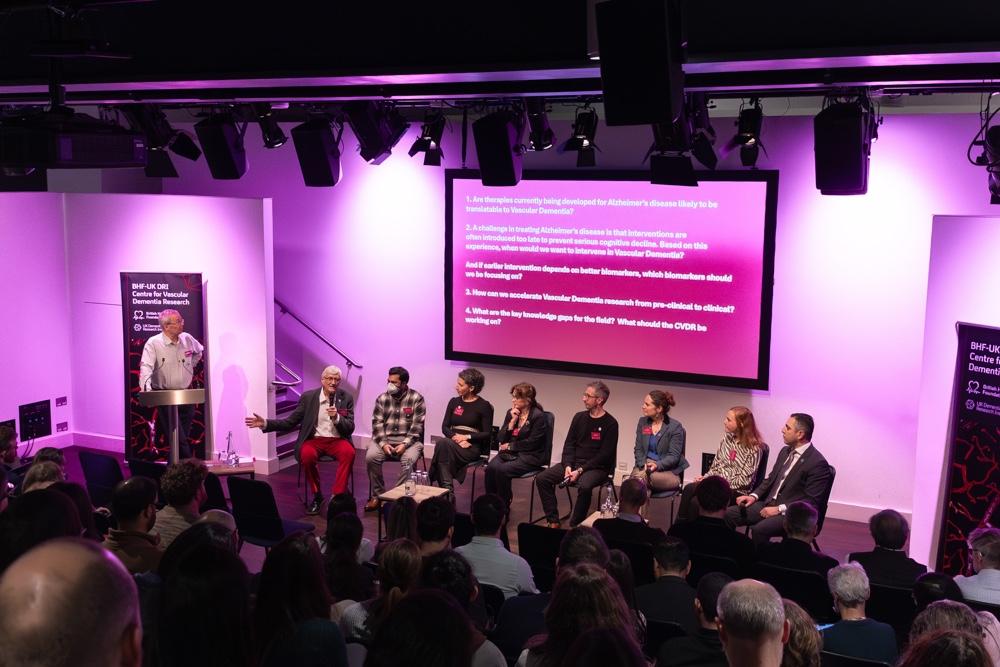
Prof David Attwell and the CVDR Group Leaders took part in a panel discussion at the official centre launch event
Prof Baljit Khakh, a global leader in astrocyte and brain function research, was appointed Director of the UK DRI at Cardiff and will take up the post in summer 2026. New Group Leaders Prof Jon Schott, Prof Suvankar Pal, Prof Paresh Malhotra were appointed to boost our clinical capability and Dr Emil Gustavsson also joined the Institute, bringing diverse expertise across neurodegeneration research.
Making breakthrough discoveries
UK DRI scientists continued to deliver important breakthroughs in 2025, bringing us closer to transforming outcomes for people living with and at risk of neurodegenerative conditions. Highlights included studies suggesting omega-3s may be protective against MND and frontotemporal dementia; new insights into how anti-amyloid drugs work; research revealing that memory forming brain cell activity is disrupted by tau in Alzheimer’s; work pinpointing the moment the brain transitions from wakefulness to sleep; a study uncovering how cells keep protein levels controlled; research suggesting tau spreads through synapses in progressive supranuclear palsy; and work revealing biomarker changes in the brains of ex-professional rugby players.
Prof Nir Grossman and Prof Derk-Jan Dijk showcased their research into the link between sleep and Alzheimer's on ITV News
Seeing impact in the clinic
2025 saw the UK DRI community making tangible impact in the clinic. A global Huntington’s disease trial led by a team including Prof Sarah Tabrizi, Prof Liam Gray, Prof Anne Rosser and Dr Tom Massey, reported positive results, showing a 75% reduction in disease progression compared with a matched untreated cohort – the first time a drug trial has demonstrated sustained, statistically significant slowing of Huntington’s progression.
The Dementia Trials Accelerator, an initiative led by the UK DRI and Health Data Research UK, made major progress, welcoming many new partners on board, and is on track to recruit its first participant in early 2026.
Our flagship digital care platform, Minder, reached a key milestone with the launch of a new NHS service in collaboration with Imperial College Healthcare NHS Trust, using in-home sensors to anticipate changing needs of people living with dementia, to reduce unnecessary hospital admissions and enable earlier intervention by clinicians.
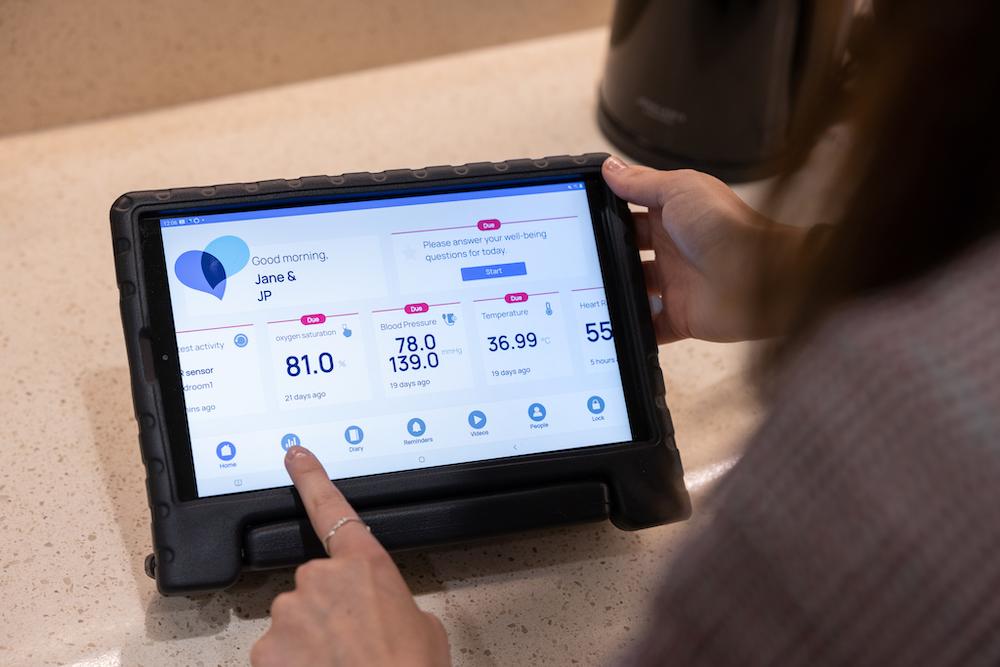
MinderCare uses a network of sensors installed in the home to send data back to a dedicated team of clinical specialists.
MND-SMART, the UK DRI’s flagship trial for motor neuron disease (MND) led by Profs Siddharthan Chandran and Suvankar Pal, began testing a fourth promising drug, tacrolimus. Over 1000 people have been enrolled at 23 sites across the UK since the trial launched in 2020.
Advances in risk and prevention
We continued to advance understanding of dementia risk and prevention. New collaborations with the Madras Diabetes Research Foundation and the Indian Institute of Science brought together expertise in diabetes, neuroscience and dementia to explore how metabolic disorders influence cognitive decline.
A major partnership with GSK and Health Data Research UK aims to investigate the observed association between shingles vaccination and reduced dementia risk, leveraging the UK’s unique health data ecosystem.
New research led by Prof Valentina Escott-Price revealed insight into the relationship between sleep and dementia, concluding that people who experience sleep disorders are at greater risk of developing dementia and other neurodegenerative conditions later in life.
Convening scientific exchange
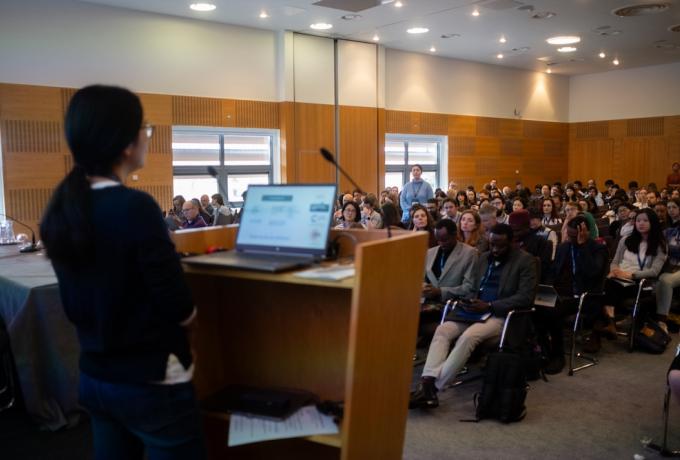
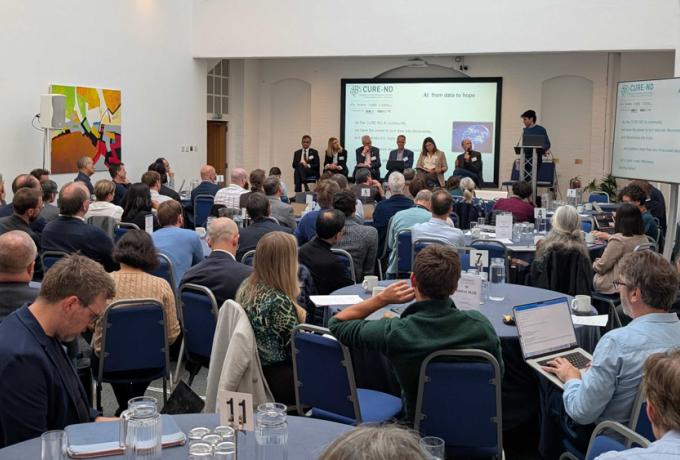
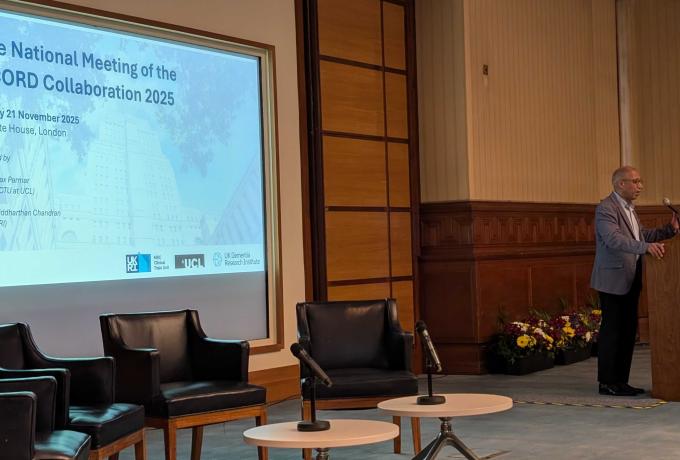
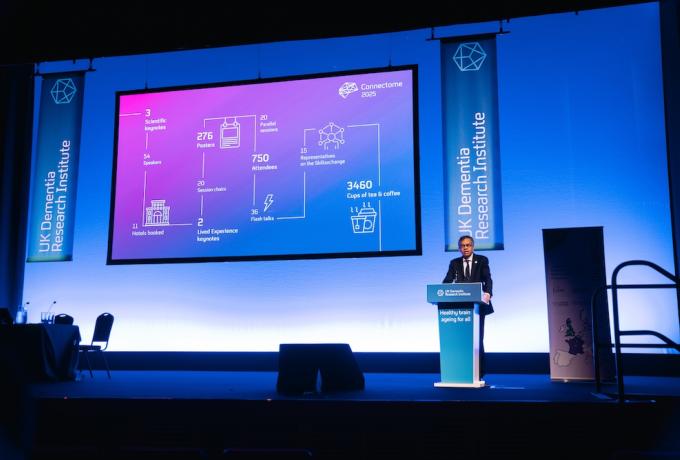
We brought together researchers from across the institute and beyond, for a series of scientific meetings throughout the year, including the following:
Developing new tools
UK DRI researchers developed and tested new tools to improve diagnosis and monitoring. A study led by Prof Nick Fox showed that parallel imaging techniques could reduce dementia MRI scan times by up to two-thirds, potentially doubling clinical scanning capacity.
Prof Valentina Escott-Price and her team found that AI can perform as well as traditional methods in identifying Alzheimer’s risk genes. Dr Maura Malpetti developed a method of standardising brain imaging results for PSP and Alzheimer’s.
We launched a landmark partnership with the Centre for Brain Research (CBR) at the Indian Institute of Science (IISc), in Bangalore, along with a new postdoctoral fellowship initiative. The four-year fellowships based at the CBR, will focus on developing and scaling minimally invasive digital and blood-based tools and biomarkers.
In partnership with Race Against Dementia, we launched a new Fellowship Scheme to support early-career researchers using AI and machine learning to accelerate progress in dementia research. We also joined forces with the Alzheimer’s Disease Data Initiative to explore plasma-based proteomic biomarkers using the NULISA platform.
Showcasing our science
We showcased our science to a diverse range of audiences this year, kicking off the year with a 'science showcase' event in Parliament, welcoming MPs, Peers and their staff from all parties to meet with researchers and interact with our research. Other highlights included visits from Ministers and MPs to our centres, and participation in major science festivals and public events across the UK, including Great Exhibition Road and the Lambeth Country Show. We also established a new webinar series, ‘Rethinking Neurodegeneration’, diving into the big topics and questions that could change our understanding of neurodegeneration.
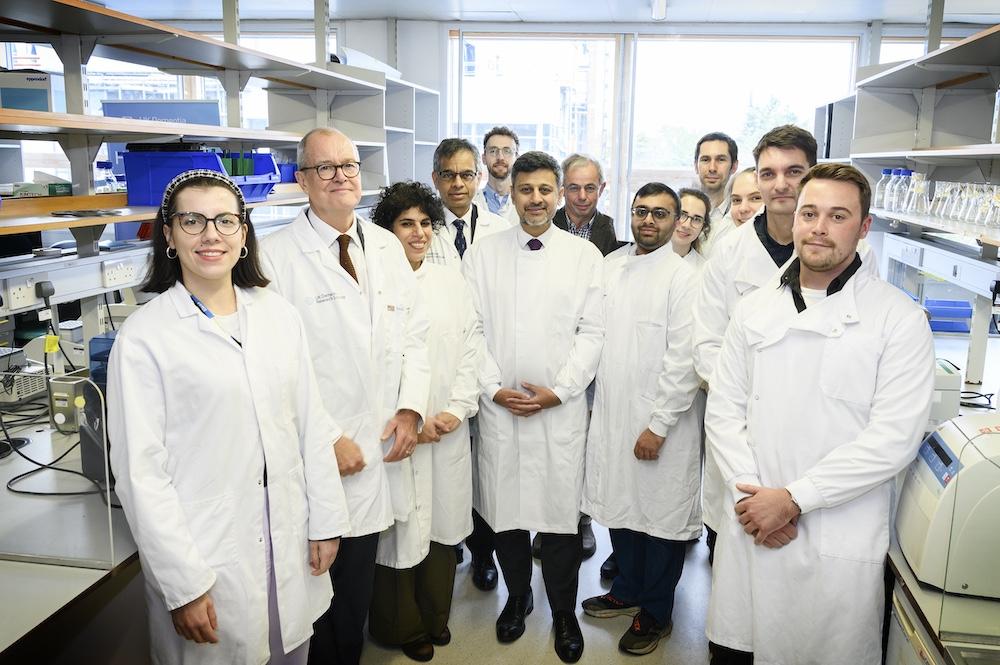
We hosted Science Minister Lord Vallance and Health Innovation Minister Zubir Ahmed MP at the UK DRI at Cambridge
The team at the UK DRI at King’s launched a new podcast ‘Between the signals’ aimed at bringing greater understanding about neurodegenerative conditions, and the groundbreaking research going into treating them, to a public audience. Prof Julie Williams launched a podcast, aimed at answering the questions everyone asks about understanding, caring and living with dementia.
UK DRI members Dr Nathasia Muwanigwa and Dr Dayne Beccano-Kelly, alongside Dr Moïse Roche (UCL Division of Psychiatry), led a community discussion about dementia with over 60 attendees from Black African and Caribbean communities aged 60+, their family members, and other stakeholders. This event formed part of a wraparound public engagement initiative linked to the production Miss Myrtle’s Garden. Nathasia was awarded the UK DRI Engagement Prize for her efforts.
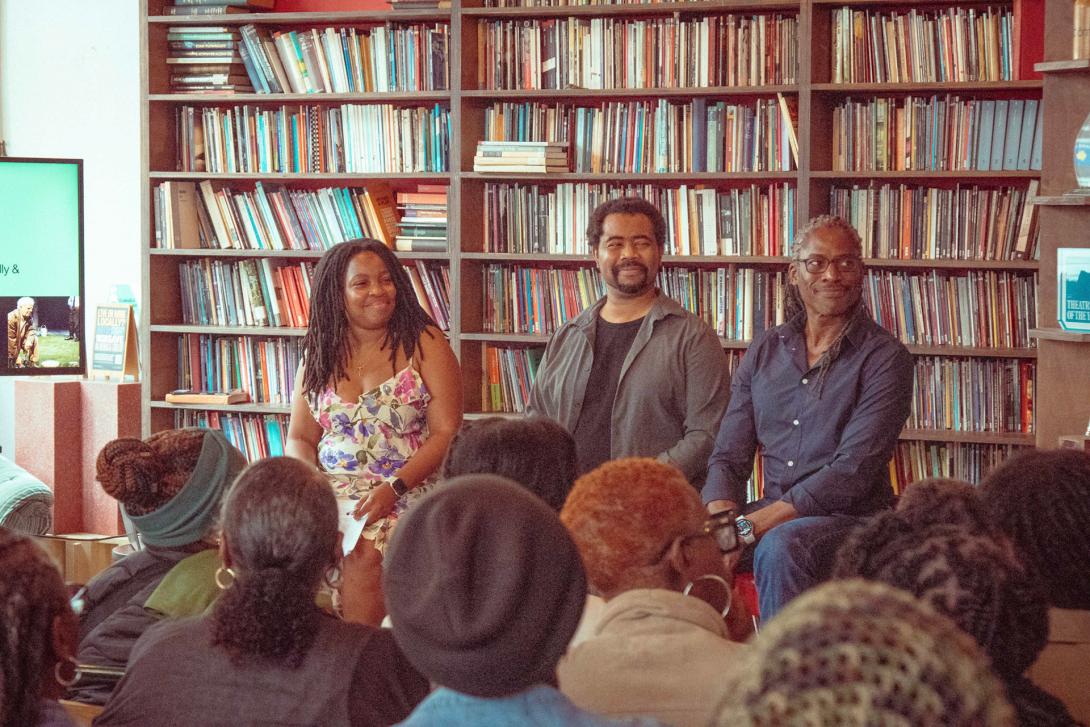
Dr Muwanigwa, Dr Beccano-Kelly and Dr Roche at the Miss Myrtle's Garden panel discussion
Celebrating scientific excellence
We were proud to celebrate the achievements of our community this year, including including all the recipients of our annual UK DRI Recognition Prizes, as well as UKRI Future Leader Fellowships awarded to Dr Mathieu Bourdenx, Dr Sophie Morse and Dr Wioleta Zelek; election to the Academy of Medical Sciences for Prof Mina Ryten and Prof Jernej Ule; and fellowships awarded to Dr Soraya Meftah, Dr Deepak Khuperkar and Dr Nan Fletcher-Lloyd, among many others.
Further, Prof Bart De Strooper received a CBE and the Khalid Iqbal Lifetime Achievement Award at the Alzheimer’s Association International Conference, Dr Mootaz Salman was awarded the Bayliss-Starling Prize Lecture 2025 by the Physiological Society and the Geoffrey Burnstock Prize by the British Pharmacological Society, Prof Sarah Tabrizi was awarded the British Neuroscience Association Outstanding Contribution to Neuroscience Award, Prof Valentina Escott-Price was awarded the Interdisciplinary Research Award by Women in Neuroscience UK, Dr Maura Malpetti was awarded the 2025 European Young Researcher Award from the Fondation Recherche Alzheimer, and Dr Wioleta Zelek was awarded the Rising Research Star Award by Health and Care Research Wales. Congratulations to all those recognised for their outstanding contributions this year.
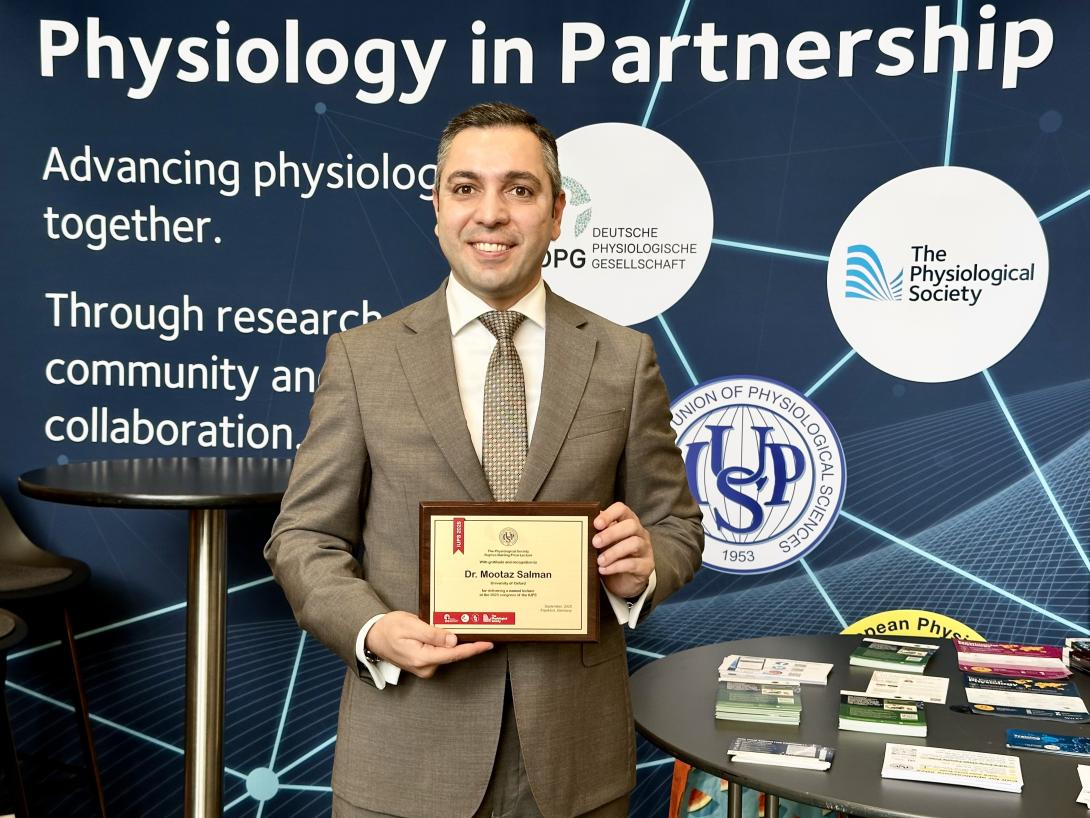
Dr Mootaz Salman was awarded the Bayliss-Starling Prize Lecture 2025 by The Physiological Society
What’s next?
As we look ahead to 2026, the achievements of the past year highlight the strength of the UK DRI’s community, partnerships and ambition. From fundamental discovery to clinical progress, risk reduction and public engagement, our researchers continue to drive change for people affected by neurodegenerative conditions. We are at an optimistic inflection point of better understanding the brain and bringing options to improve lives - we are excited to build on this momentum in the years ahead.