

Determining the role of epigenetic regulation in neurodegenerative diseases
The likelihood of someone developing dementia is influenced by a combination of their genetics and the environment they are exposed to. However, it is not clear how these factors interact with each other to affect cells in the brain. One possible mechanism is through epigenetics – chemical modifications to the genetic material in cells that regulate gene expression.
The Marzi Lab aims to determine the role of epigenetic regulation in neurodegenerative diseases, including Parkinson’s, Alzheimer’s disease and motor neuron disease, using state of the art epigenetic and genomic techniques in cell populations and at the single cell level. The team's research has the potential to identify an epigenetic link between genetic and environmental risk in dementia and identify mechanisms by which these risk factors make cells susceptible to neurodegeneration. The aim of this research is to reveal opportunities and avenues for new therapies for neurodegeneration and dementia.
Latest news

Dr Sarah Marzi
Dr Sarah Marzi is a Group Leader at the UK DRI at King's. Find out more about her career and expertise on her profile page.

Research summary
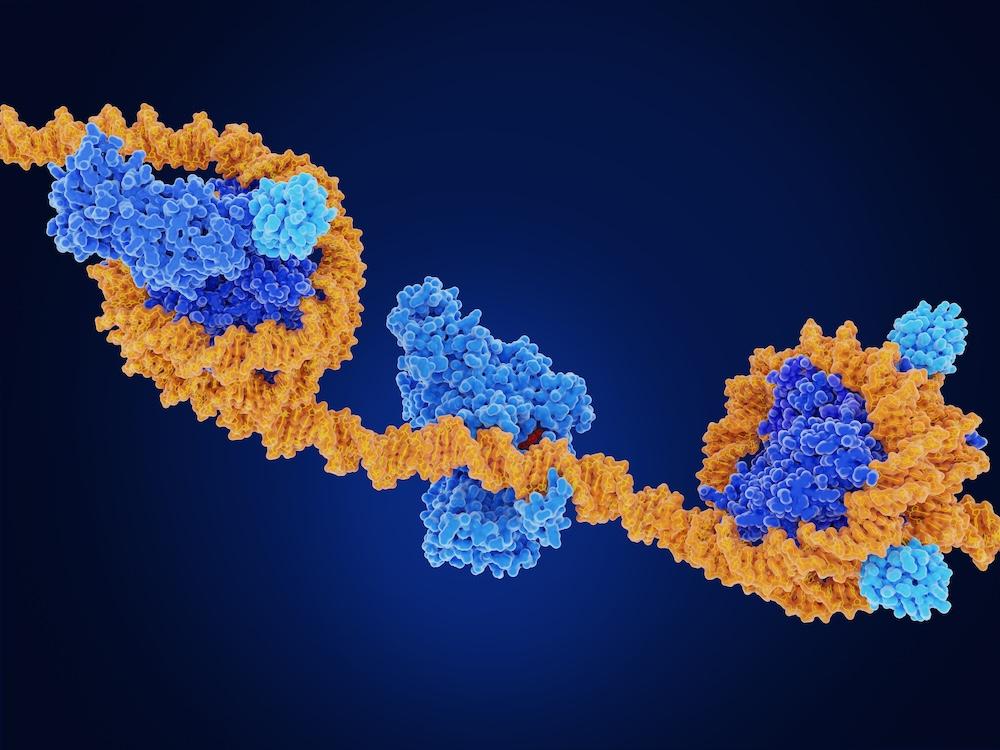
The study of how these factors affect epigenetic processes - a collection of biochemical mechanisms that regulate the levels, location and timing of gene expression - is emerging area of interest in dementia and neurodegeneration. Credit: Shutterstock/Juan Gaertner
Epigenetic regulation of environmental and genetic risk in neurodegenerative disease
While it is known that genetic variants and environmental factors contribute to the risk of developing neurodegenerative diseases, the biological mechanisms involved remain largely unknown. An emerging area of interest is the study of how these factors affect epigenetic processes, a collection of biochemical mechanisms that regulate the levels, location and timing of gene expression.
Dr Sarah Marzi is an expert in epigenetic regulation, particularly in relation to human disease. She has expertise in advanced sequencing techniques, including those sensitive to epigenetic modifications, working with human brain tissue as well as in vivo and in vitro model systems. The Marzi Lab combines these experimental techniques with innovative statistical and computational analytical methods in their research.
In her UK DRI programme, Dr Marzi is studying functional epigenetic pathways and mechanisms in Parkinson’s and Alzheimer’s diseases. One of Dr Marzi’s core interests lies in the immune cells of the brain. There is growing evidence that disease-associated microglia states play an important role in how genetic variants influence Alzheimer’s disease. The Marzi Lab aims to identify the upstream regulatory mechanisms that control microglia state transitions and observed gene-environment interactions.
Evidence also suggests that certain environmental factors, particularly several types of agricultural pesticide, can increase the risk of Parkinson’s disease. As the mechanisms via which these environmental risk factors act on disease are not clear, the Marzi Lab is investigating how epigenetic processes may be playing a role.
Main objectives and research goals:
- Determine how gene regulation is altered in specific disease-relevant cell types in an environmentally-induced Parkinson’s disease model.
- Identify where the earliest molecular changes occur.
- Determine cell-type specific vulnerabilities to exposure to the pesticide rotenone.
- Identify how non-coding genetic risk variants relate to environment-driven regulatory changes.
Key publications
Vacancies
Lab members


Collaborators











Lab funders
Thank you to all those who support the Marzi Lab!